Travel guide
Best time to visit Sahara desert Morocco: weather, crowds and dates month by month
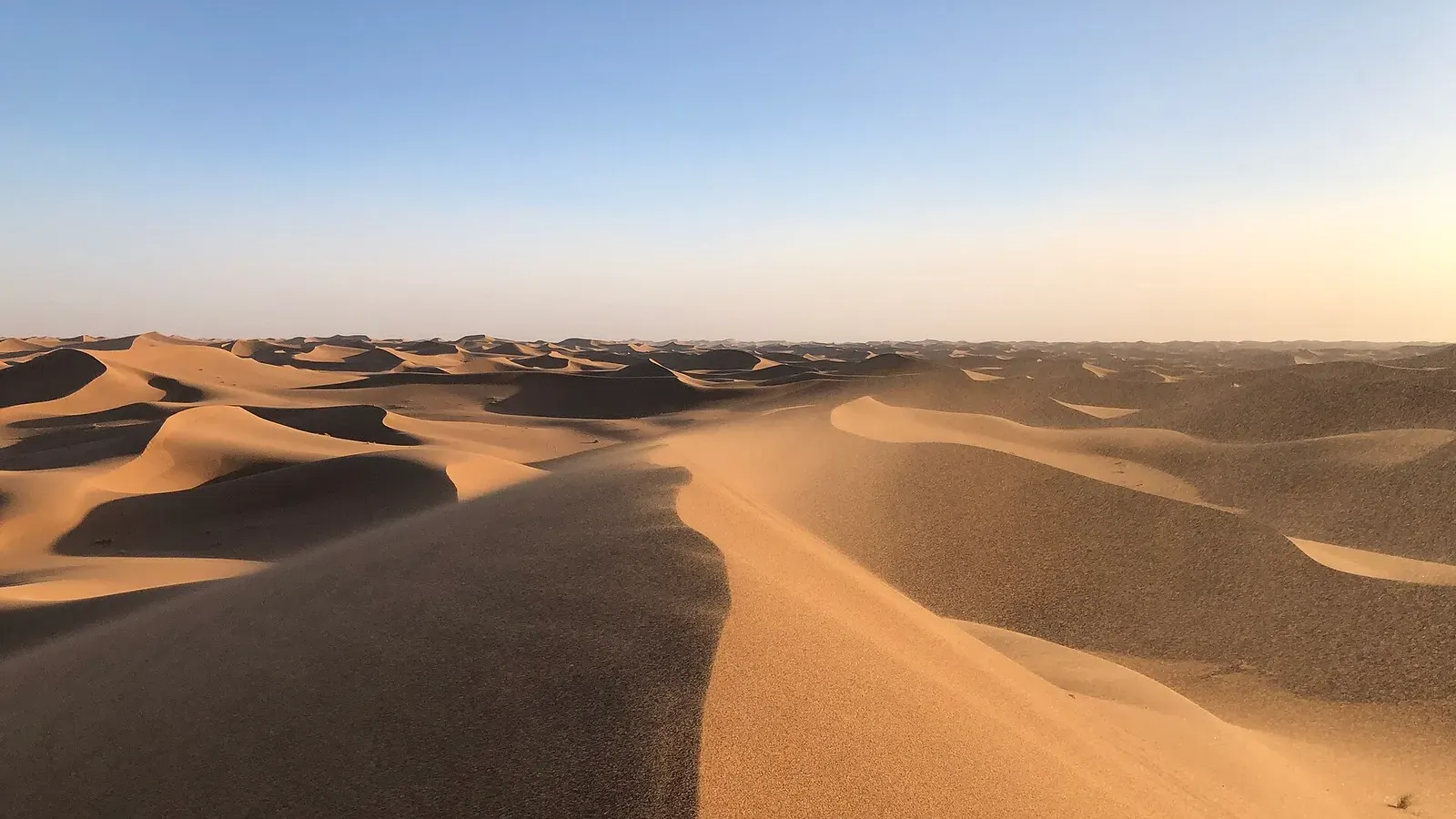
Photo: Thomas Woodtli / Wikimedia Commons (Flickr), CC BY-SA 2.0
The best time to visit Sahara desert Morocco camps is from mid-October to the end of November and from February to mid-April. In those months, days in the dunes run from the low 20s to about 30°C and nights are cool rather than cold. December and January work well if you pack for nights around 5°C, while June to August is hot enough (highs above 40°C) that most travellers should avoid it.
Best time to visit Sahara desert Morocco, season by season
Autumn, from mid-October to November, is the sweet spot for many people. The summer heat has gone, days are warm, and nights cool down without being harsh. This is also when the little rain the region gets is most likely, so a cloudy day or a muddy piste is possible.
Winter, December and January, brings mild sunny days around 19 to 20°C and long, cold nights. It is the quietest season outside the holidays, and all that darkness suits stargazing. The Tizi n’Tichka pass on the way from Marrakech can close for snow.
Spring, February to mid-April, is the other prime window, with warm days and comfortable nights. The catch is wind: March to May is the breeziest time of year, and blowing sand is more likely.
Late spring and summer, from mid-May to September, is hot. July highs average about 42 to 45°C around Zagora and M’hamid. Desert trips still run, but only early mornings and evenings are pleasant.
Morocco desert temperature, month by month
The table gives average daytime highs and night-time lows for the two main desert areas. For Zagora, M’hamid and Erg Chigaga, the ranges combine WeatherSpark’s Zagora averages, the Climate-Data.org station table quoted on Wikipedia, and our own calculation from ERA5 reanalysis data for M’hamid (2006 to 2025, via Open-Meteo). For Merzouga and Erg Chebbi, highs come from Foreca and Copernicus 1991 to 2020 averages and lows mainly from ERA5. We rounded to whole degrees and kept the spread between datasets rather than inventing a single “true” figure.
| Month | Zagora, M’hamid, Erg Chigaga: high / low (°C) | Merzouga, Erg Chebbi: high / low (°C) | In short |
|---|---|---|---|
| January | 19-20 / 4-6 | 17-19 / 4-6 | Sunny, cold nights |
| February | 22 / 6-8 | 20-21 / 5-6 | Pleasant days, cool nights |
| March | 26 / 10-12 | 24-26 / 9-10 | Warm, getting windy |
| April | 30-31 / 13-16 | 29-30 / 13-15 | Warm to hot, windiest stretch begins |
| May | 34-36 / 17-20 | 33-34 / 17-19 | Hot by midday |
| June | 39-41 / 21-24 | 38-39 / 21-23 | Very hot |
| July | 42-45 / 25-28 | 42-43 / 27-29 | Hottest month |
| August | 41-44 / 25-28 | 40-42 / 25-27 | Very hot |
| September | 36-37 / 20-23 | 35-37 / 20-22 | Hot, first rain showers |
| October | 30-31 / 15-18 | 29-30 / 14-16 | Warm days, cooler nights |
| November | 24-25 / 10-11 | 22-24 / 8-10 | Mild, wettest month in Zagora |
| December | 19-20 / 5-7 | 18-20 / 3-5 | Mild days, cold nights |
If you look up Erg Chigaga weather or M’hamid weather, most of what comes back is model estimates for a grid point, so the Zagora figures above, which include station-based data, make a sound reference.
Two things the averages hide. First, these are town and grid values; the open dunes cool fast after sunset, so a clear, windless night can feel colder than the table. Second, averages smooth out cold snaps and heat waves. WeatherSpark’s long-term data for Zagora shows temperatures rarely going below 33°F (about 0.5°C, just above freezing) or above 112°F (about 44°C).
Morocco desert temperature at night
Night is what catches people out. From December to February, plan for 4 to 8°C at camp, sometimes lower on a clear night. That is jacket-and-hat weather around the fire, and you will want a proper blanket or sleeping bag in the tent. In March and November, nights of 8 to 12°C feel fresh rather than cold. In summer the problem reverses: July nights often stay above 25°C, so tents can be stuffy long after dark. Our guide on what to wear in the Sahara desert in Morocco has a packing list by season.
Day length matters too. Around the winter solstice Zagora gets about 10 hours 11 minutes of daylight, against just over 14 hours in late June. In December you arrive at camp close to sunset and have a very long, dark night, which is good news for Morocco desert stargazing.
Sandstorm and wind season
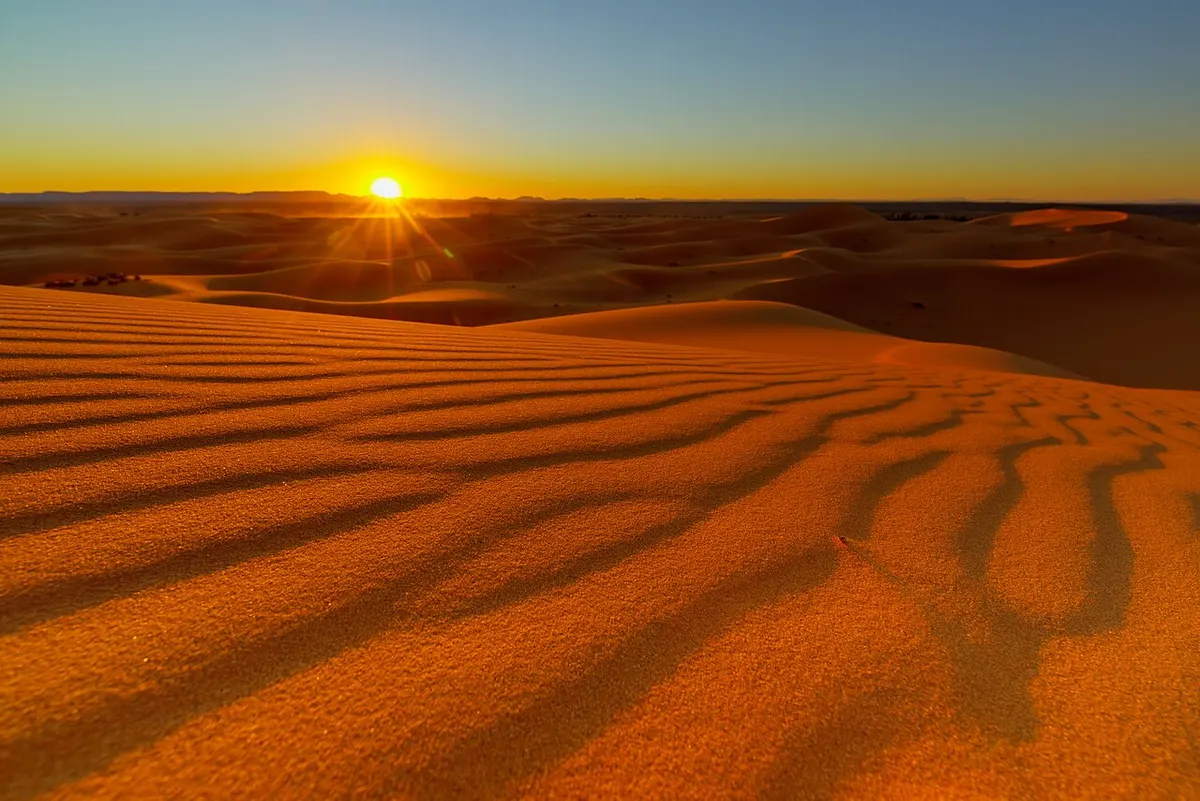
Wind is the most underrated factor in choosing dates. In our analysis of 20 years of ERA5 data for M’hamid and Merzouga, the strongest daily winds and the most days with gusts above 50 km/h fall between April and June, and March is not far behind. November to January are the calmest months.
That does not mean spring trips get buried in sand. A study of aerosols at Ouarzazate published in Remote Sensing in 2022 notes that earlier research found desert dust events to be rare, fewer than two a year, and mostly in spring and summer. What you are more likely to meet is a day of haze and blowing sand that softens the sunset and gets into everything. A big storm can still happen: one swept across southern Morocco on 30 March 2026. Carry a scarf or buff and sunglasses whatever the month.
Rain, flooded pistes and snow on the Atlas
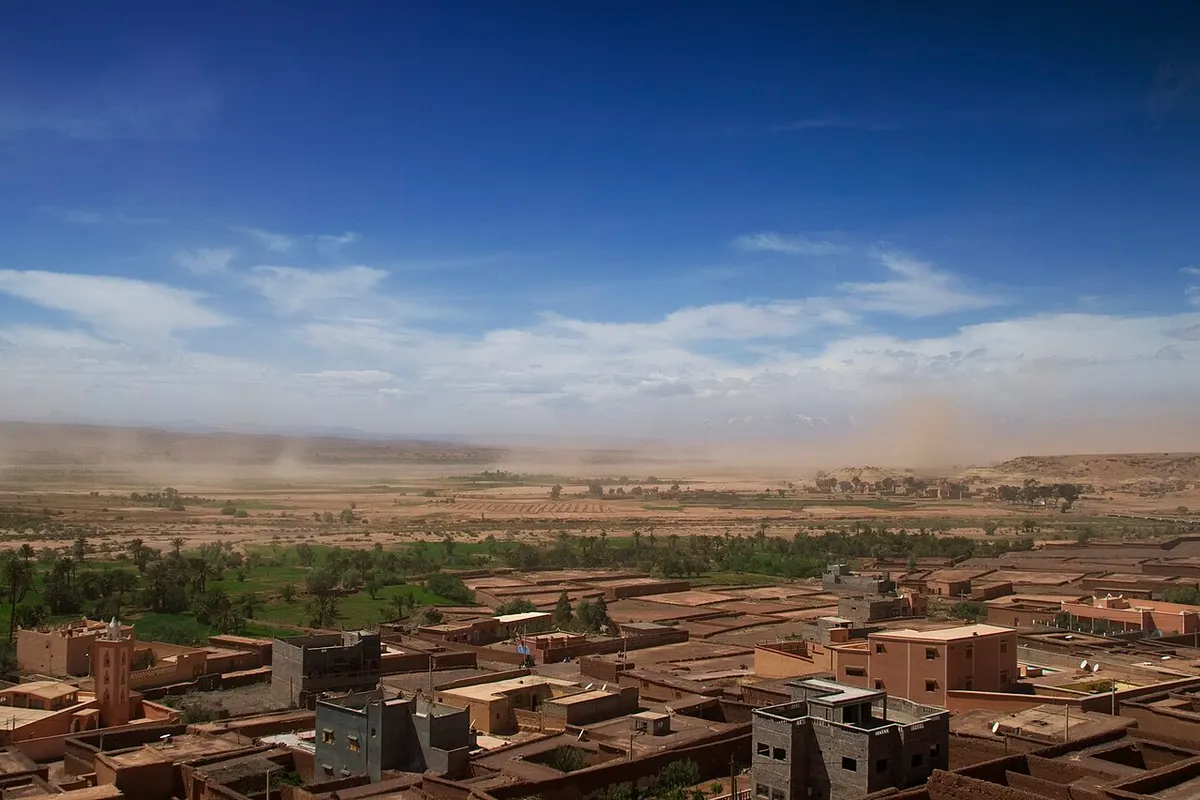
Rain is rare. Zagora averages about 60 mm a year according to Climate-Data.org, and most of it falls from September to November, with November the wettest month in WeatherSpark’s data. A shower in the desert is usually short, but the after-effects matter if you plan to cross from Foum Zguid to Erg Chigaga: after the wetter months, roughly October to December, the bed of Lake Iriki can turn to mud that traps vehicles.
The bigger winter risk is on the way there. The Tizi n’Tichka pass between Marrakech and Ouarzazate tops out above 2,200 m, and snow can close it between December and March. On 16 December 2025 all traffic was stopped at the pass after a night of heavy snow. Build a spare half-day into winter itineraries.
Ramadan 2027, Eid and public holidays
Ramadan follows the lunar calendar, so it moves about 11 days earlier every year, and Morocco fixes the start by its own moon sighting. For 2027, timeanddate lists a tentative start on Monday 8 February, and the UAE’s astronomy centre projects the same start with Eid al-Fitr on 9 or 10 March. Morocco’s dates may differ by a day.
That puts Ramadan 2027 in the middle of a prime desert window. You can travel normally; the difference shows mostly in towns, where some cafés and restaurants close during the day and the streets fill up after sunset. Around Eid al-Fitr, and again around Eid al-Adha (projected for 16 or 17 May 2027), shops close and some buses do not run on the main days, so avoid long bus journeys on those dates.
Festivals in the Moroccan Sahara
A few events are worth planning around. Dates move each year, so treat these as patterns and check the organisers’ announcements.
| Event | Where | Usual timing | Recent dates |
|---|---|---|---|
| International Nomads Festival | M’hamid | Spring | 10 to 13 April 2025; 3 to 5 April 2026 |
| Rose festival | Kelaat M’Gouna, on the Ouarzazate to Merzouga road | Early to mid May | Began around 7 May in 2026 |
| SIDATTES date fair | Erfoud, near Merzouga | Late October to early November | 29 October to 2 November 2025 |
| Taragalte festival | M’hamid | Late October or November | 30 October to 2 November 2025 |
The 2027 dates for the Nomads Festival had not been announced when we checked in November 2026. If you want to stay in M’hamid during a festival, book early, because it is a small oasis.
School holidays and busy weeks
Crowds in the Moroccan desert follow European school calendars more than the weather. French families travel in large numbers, and the 2026 to 2027 French holidays fall on these dates:
- Toussaint: 17 October to 2 November 2026 (all zones)
- Christmas: 19 December 2026 to 4 January 2027 (all zones)
- Winter: staggered from 6 February to early March 2027 (zone C from 6 February, zone A from 13 February, zone B from 20 February)
- Spring: staggered from 3 April to early May 2027 (zone C from 3 April, zone A from 10 April, zone B from 17 April)
Easter Sunday falls on 28 March 2027, which shapes UK and other European spring breaks. Christmas and New Year are busy everywhere. If your dates are flexible, early to mid November and the second half of January are typically quieter, and the weather is still good.
Best months by type of traveller
| You are | Best months | Why |
|---|---|---|
| A first-time visitor | Mid-October to November, mid-February to mid-April | Warm days, comfortable nights |
| A family with young children | Late October (Toussaint), April | Mild nights, school holidays line up |
| A stargazer | November to February | Long, dark, calm nights |
| A camel trekker or walker | November to early March | Cooler days for walking |
| Looking for quiet and lower demand | Early December, mid to late January | Outside the main holiday weeks |
| Only free in summer | June to August, with care | Very hot; plan early starts and shade |
Travelling with children has its own trade-offs, from night temperatures to long drives; our guide to the Morocco desert with kids covers them.
Plan your desert trip
- Read about the dunes themselves in our Erg Chigaga guide and the wider Sahara desert Morocco overview.
- Check how long the drive takes in our distance from Marrakech to Sahara desert guide.
- When your dates are set, see our Erg Chigaga tours.
Frequently asked questions
What is the best time to visit Erg Chigaga?
Mid-October to November and February to mid-April. Days in the dunes are then around 22 to 31°C and nights cool but manageable. December and January are fine too if you pack for nights near 5°C. Avoid June to August, when daytime highs in the M'hamid area pass 40°C, and expect more wind in March, April and May.
How cold is the Moroccan desert at night?
In December and January, average lows in Zagora, M'hamid and Merzouga are about 4 to 7°C, and WeatherSpark notes Zagora rarely drops below 33°F (about 0.5°C), just above freezing. Out in the dunes, a clear, still night can feel colder than the town figures. In summer, nights stay warm, with lows of 25 to 28°C in July. Bring a warm layer from November to March.
Can you visit the Sahara in Morocco in summer?
You can, but it is hard work. July and August highs average about 41 to 45°C around Zagora and M'hamid and about 40 to 43°C at Merzouga, and nights stay above 25°C. Rough Guides advises avoiding the south and the desert in mid-summer. If summer is your only option, keep activities to early morning and evening, drink a lot, and choose a camp that offers shade.
When is sandstorm season in the Moroccan Sahara?
Wind is strongest from about March to June, so blowing sand and dusty haze are most likely then. A full sandstorm that stops travel is rare: a 2022 study of dust over southern Morocco notes that earlier research found fewer than two desert dust events a year, mostly in spring and summer. Pack a scarf and sunglasses whatever the month, and allow some slack in your plans.
Is Ramadan a good time to visit the Moroccan desert?
It can be. Ramadan 2027 is expected to run from about 8 February to about 9 or 10 March, during good desert weather. The main change visitors notice is in towns, where some cafés and restaurants close during the day and streets come alive after sunset. Around Eid al-Fitr, shops close and some buses do not run on the main days.
What is the weather in Zagora in December?
December in Zagora is mild by day and cold at night. Average highs are about 19 to 20°C and lows about 5 to 7°C, with little rain. Days are short, around 10 hours of daylight near the winter solstice. It is a good month for walking and camel rides if you pack a warm jacket for evenings.
Is there a train to Zagora?
No. Morocco's railway ends at Marrakech, and there is no line to Zagora, M'hamid or Merzouga. From Marrakech, CTM and Supratours buses reach Zagora in about 7 hours (as of November 2026), or you can drive the 350 km in 6 to 6 h 40 without stops.
Sources we checked
- Average weather in Zagora (WeatherSpark)
- Zagora, Morocco: climate table from Climate-Data.org (Wikipedia)
- Merzouga average monthly temperatures, 1991 to 2020 (Weather and Climate, Foreca and Copernicus C3S data)
- Historical Weather API, ERA5 reanalysis (Open-Meteo)
- Aerosol distributions and Sahara dust transport in southern Morocco (Remote Sensing, 2022)
- When to go to Morocco (Rough Guides)
- Ramadan begins in Morocco (timeanddate.com)
- Ramadan, Eid Al Fitr, Eid Al Adha 2027 likely dates (Khaleej Times)
- Le 20e Festival des nomades, du 10 au 13 avril à M'Hamid El Ghizlane (TelQuel)
- 21e Festival international des nomades, du 3 au 5 avril (AllAfrica)
- Taragalte Festival 2025 call (Music In Africa)
- SIDATTES 2025 du 29 octobre au 2 novembre à Erfoud (EcoActu)
- Kelâat M'gouna : le Carnaval des roses (Hespress)
- Vacances scolaires 2026-2027 (iCalendrier)
- Parc national d'Iriqui (Explore Agadir Souss Massa)
- Fermeture du col de Tichka (TelQuel, 16 December 2025)
- Rail transport in Morocco (Wikipedia)
Keep exploring
Related pages
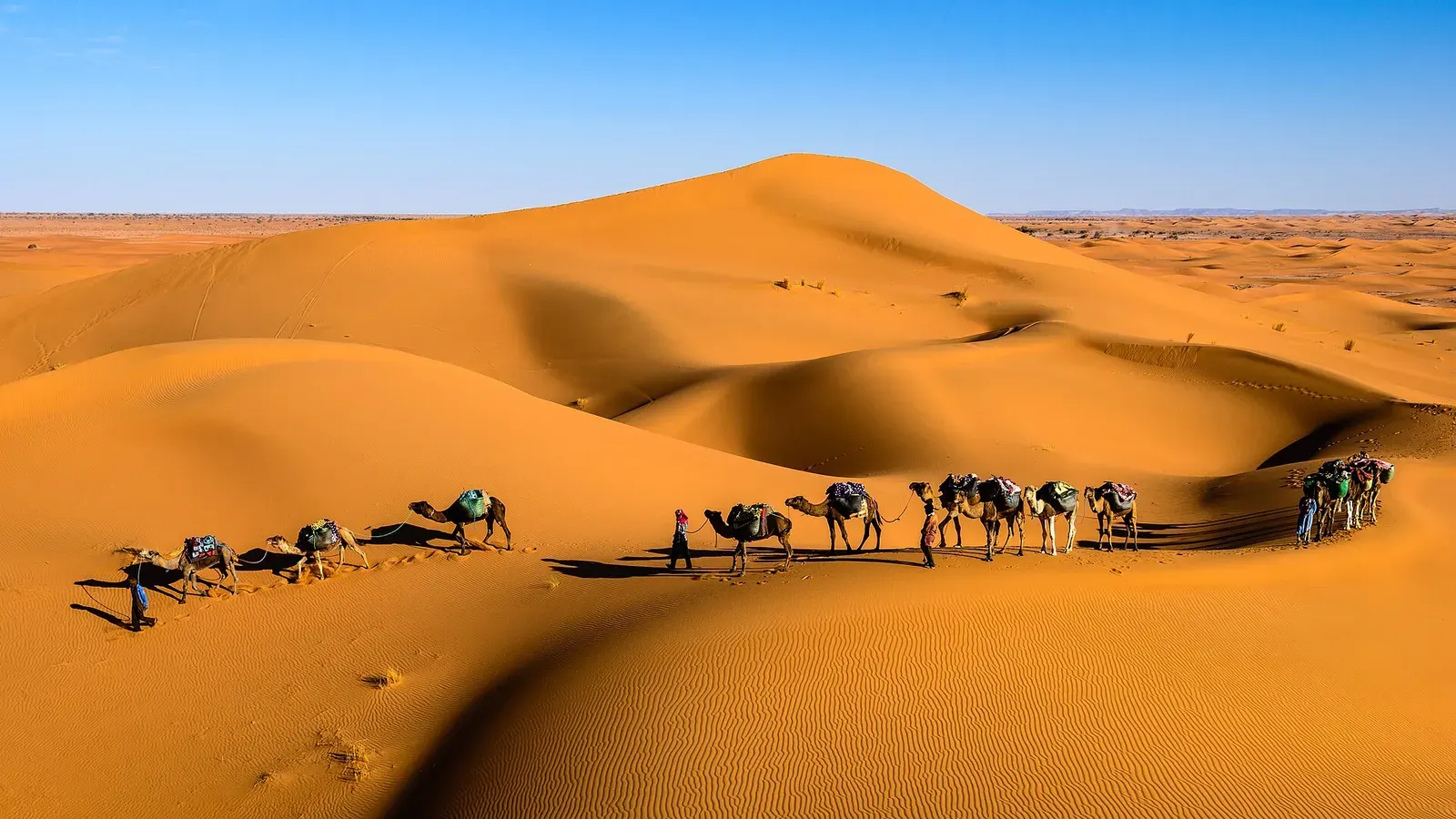 Sahara desert MoroccoSahara desert Morocco guide: where the real dunes are, erg vs hamada, the Drâa and Merzouga routes, drive times and how many days you need.Read the guide
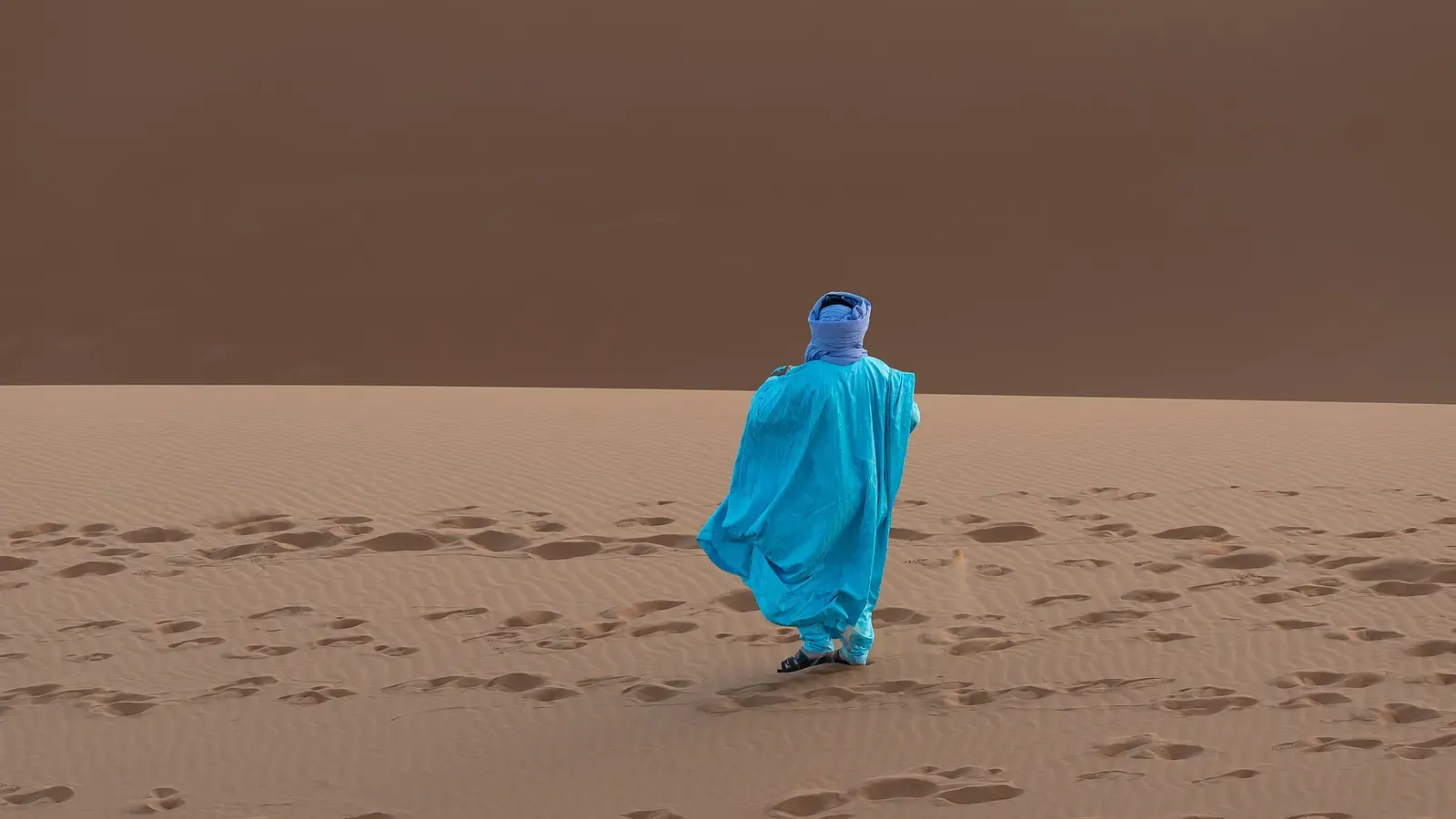 What to wear in the Sahara desert MoroccoWhat to wear in the Sahara desert Morocco: month-by-month temperatures, village dress, cheche, dune footwear, a full packing list and what to leave home.Read the guide
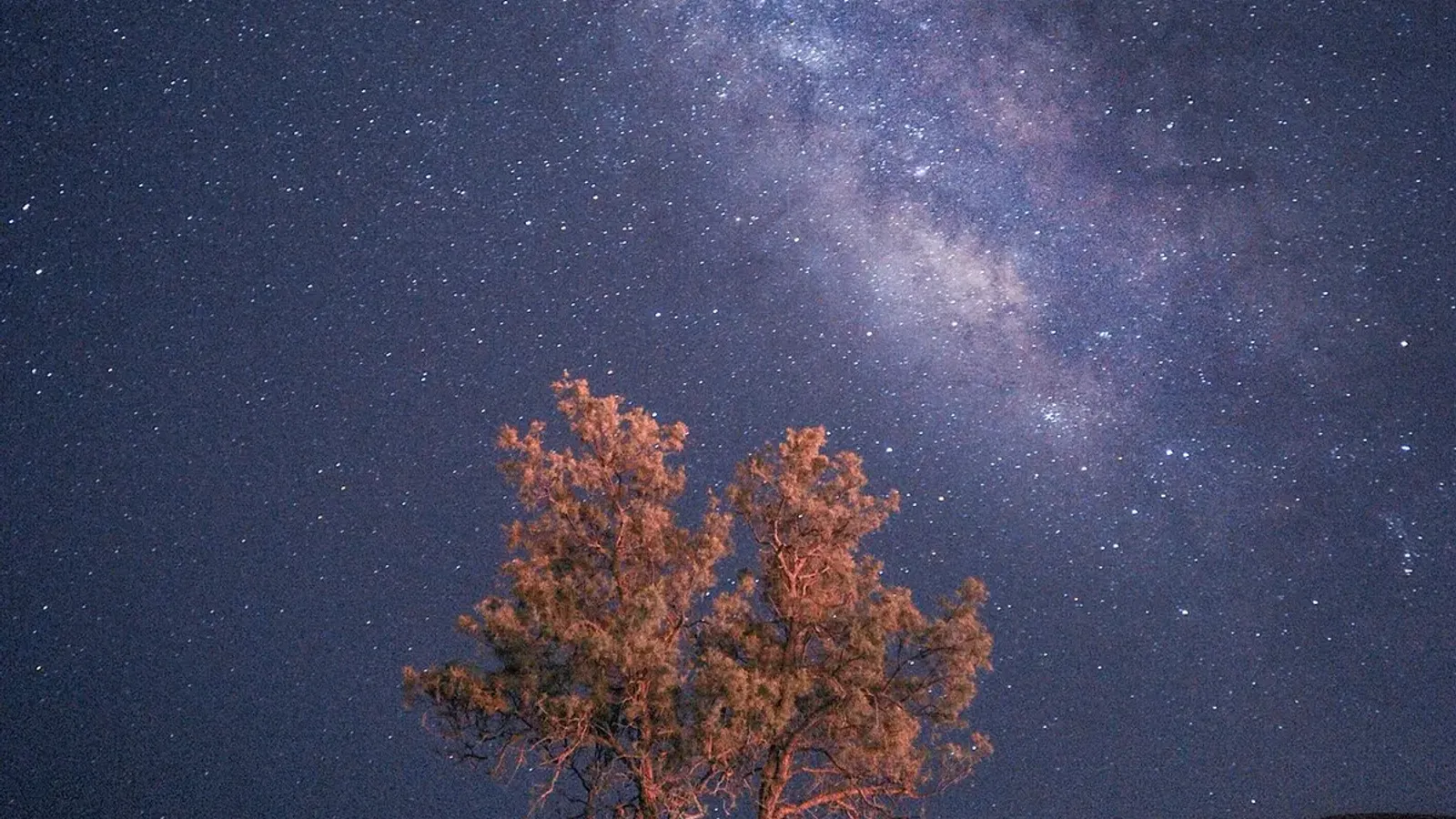 Morocco desert stargazingMorocco desert stargazing guide: why the Sahara sky is so dark, 2027 new moon dates, when to see the Milky Way, night temperatures and camera settings.Read the guide
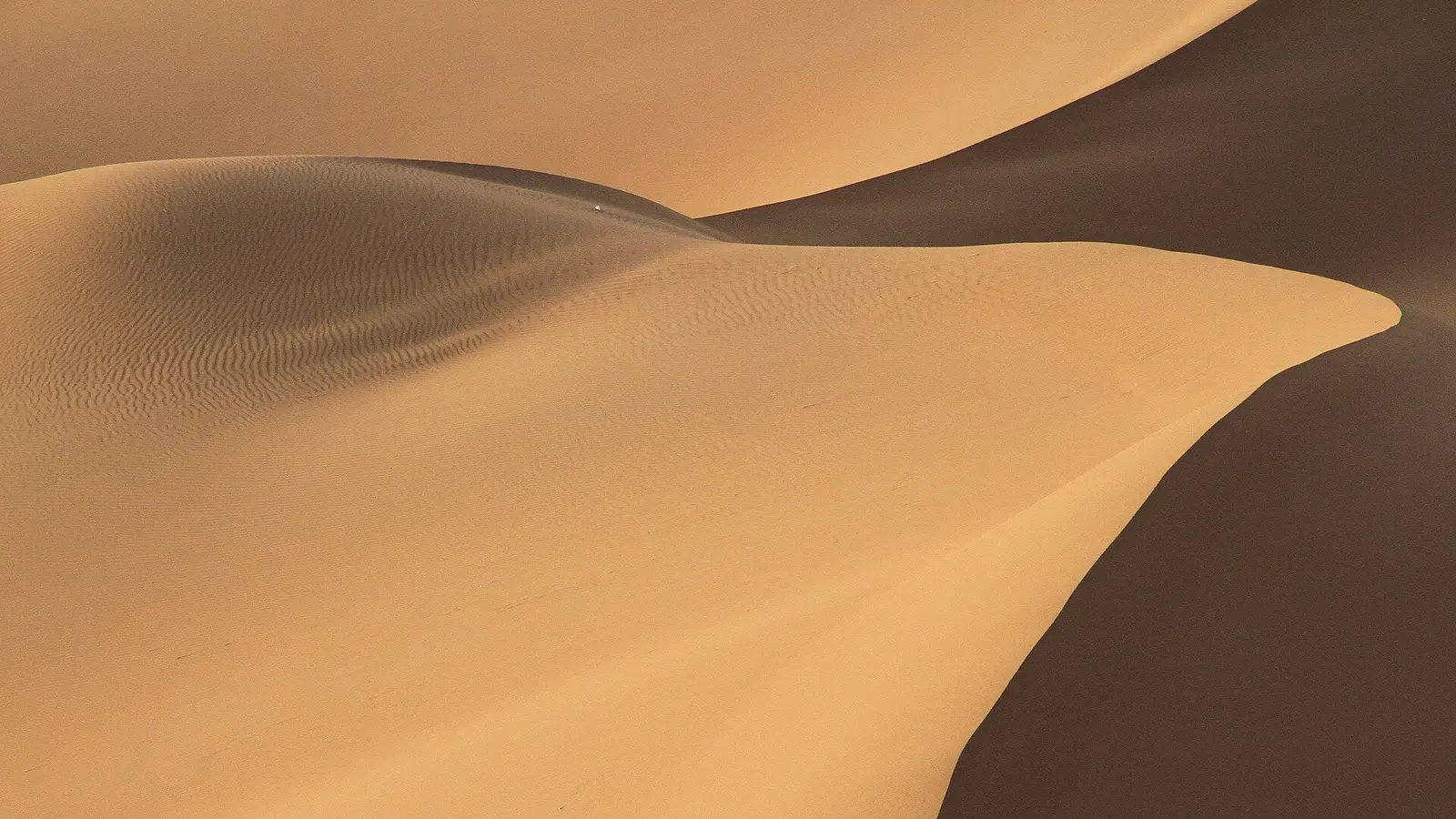 Erg Chebbi vs Erg ChigagaErg Chebbi vs Erg Chigaga, compared honestly: access, drive times from Marrakech and Fes, dune height, crowds, camps and who each desert suits.Read the guide
 Morocco desert marathon guideMorocco desert marathon guide: MDS Legendary 2027 dates, how the 250 km stage race works, shorter Sahara races, kit rules, heat and training.Read the guide