Travel guide
Morocco desert stargazing: when and how to see the Sahara night sky
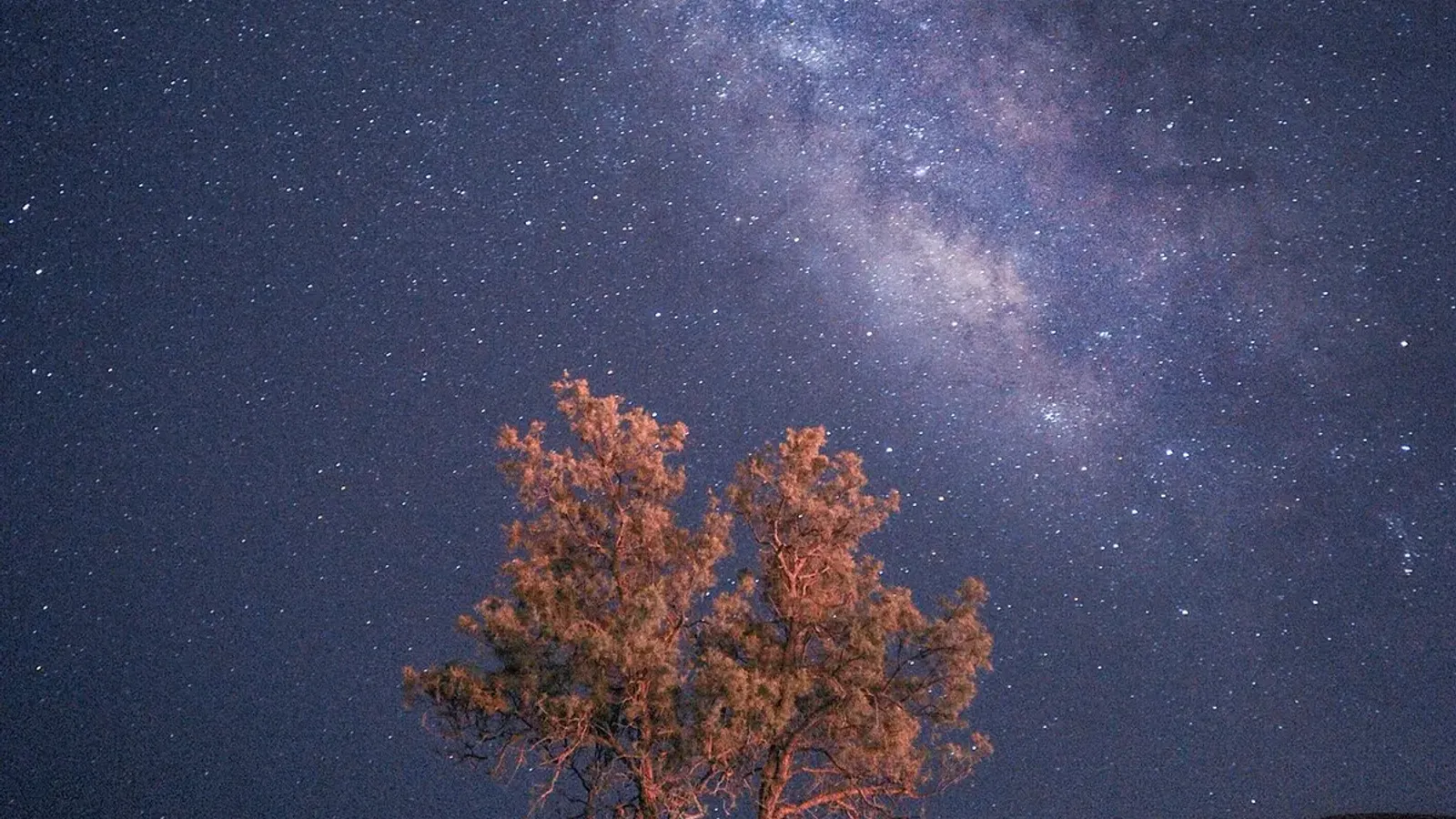
Morocco desert stargazing is at its best on a moonless night, far from the last village, somewhere like the dunes of Erg Chigaga or the open desert beyond Merzouga. The air south of the Atlas is dry, towns are small and far apart, and on the right night the Milky Way is bright enough to cast a faint glow over the sand. The trick is timing: get the moon phase wrong and you will see a fraction of it.
Why the Morocco desert night sky is so dark
Three things work in your favour once you are south of the High Atlas. The air is very dry: Zagora averages only about 60 mm of rain a year, and clear skies are the norm for most of the year. Settlements are small and widely spaced, so there is little artificial light. And at the dune camps you are often a long drive from the nearest village.
You will see claims online that Erg Chigaga or Merzouga is a particular “Bortle class”. We could not find a published sky-quality measurement from a reliable source for either, so we do not give one. To compare places yourself, open lightpollutionmap.info and zoom in on the Draa valley: you can see the glow of Zagora and Ouarzazate and how quickly it fades into darkness to the south.
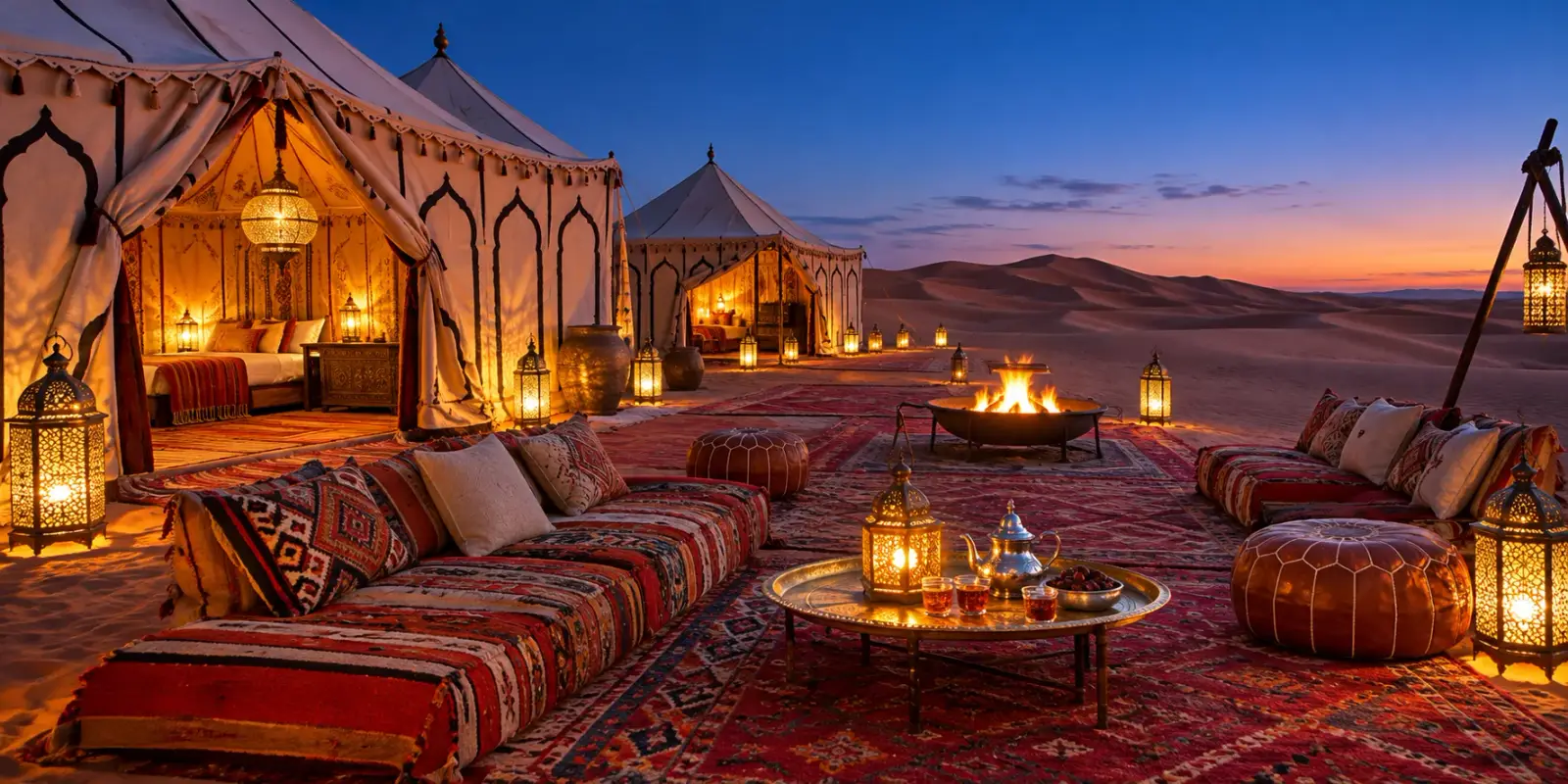
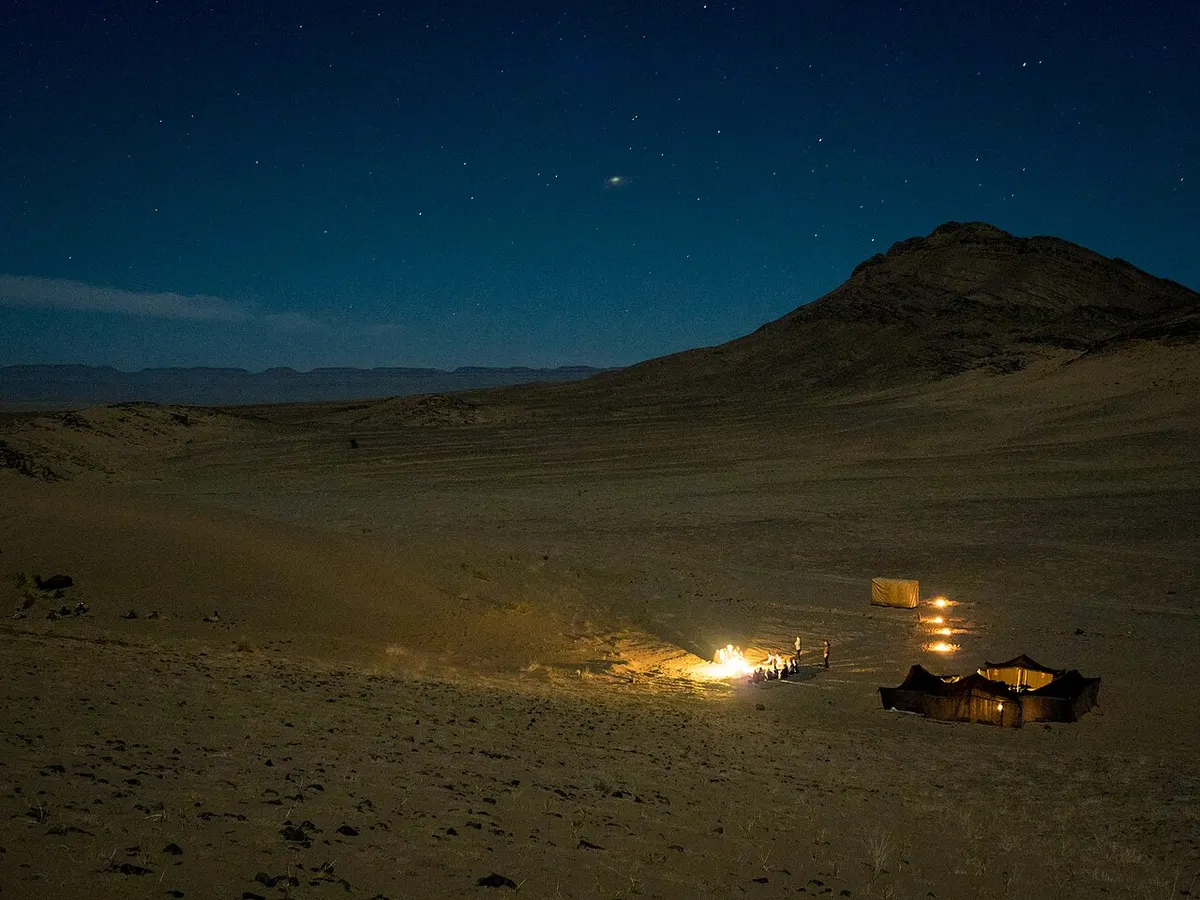
The darkest skies come with a catch. The camp’s own lights, a campfire or a neighbour’s torch will ruin your night vision far more than any distant town. Walk a little way from the tents (with a torch and closed shoes) and give your eyes at least 20 minutes to adjust.
The moon matters more than anything else
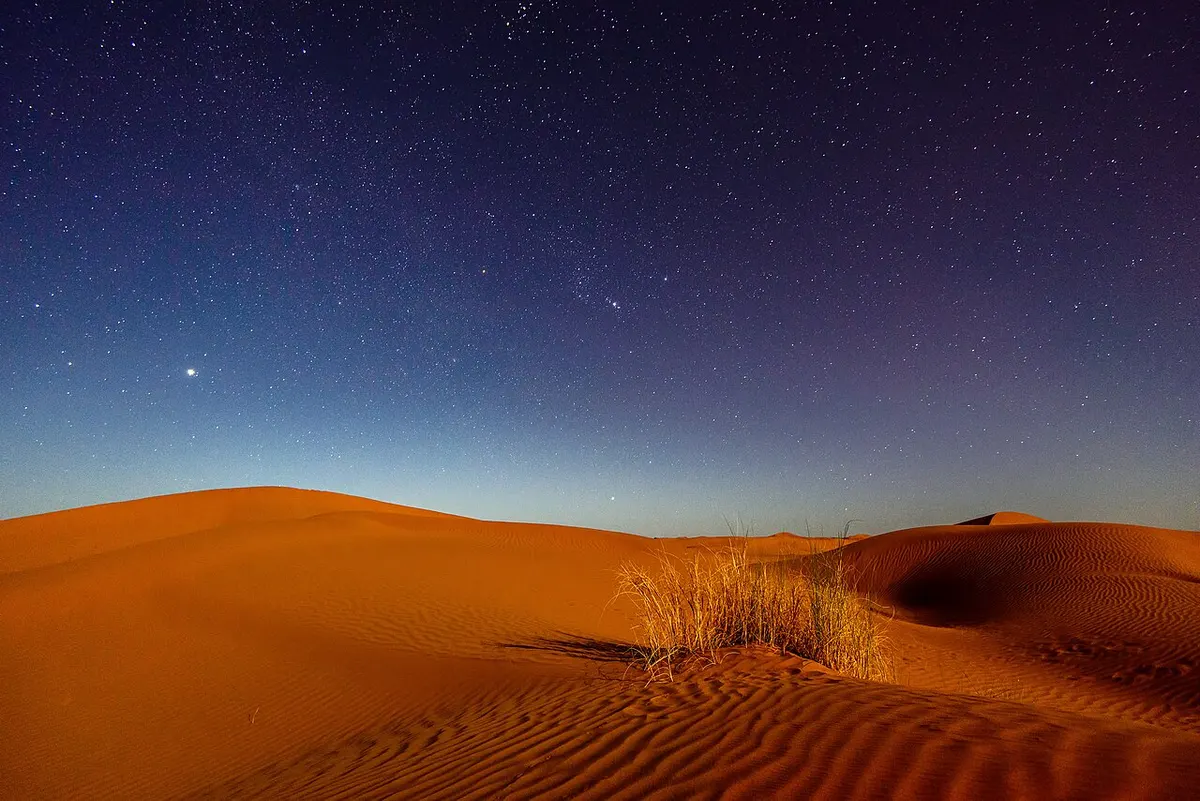
A full moon in the desert is lovely to walk under and terrible for stars. Its light washes out the Milky Way and all but the brightest stars. For Morocco desert stargazing, plan your desert nights in the week around a new moon.
How to read the calendar:
- New moon: the moon is up during the day and invisible at night. Best.
- Thin crescent (a few days either side): the moon sets soon after sunset or rises just before dawn. Still very good.
- First quarter: the moon is up in the evening and sets around midnight. Stargaze after it sets.
- Last quarter: the moon rises around midnight. Stargaze in the evening.
- Full moon: the moon is up all night. Plan a moonlit dune walk instead.
To check any date, use a moon phase calendar such as timeanddate.com or the US Naval Observatory’s online data, and look at moonrise and moonset times for Ouarzazate or Zagora rather than just the phase.
New moon dates for 2027
These dates come from the US Naval Observatory and match timeanddate.com. They are in Universal Time (UTC); Morocco is usually one hour ahead, which only moves the date for the April new moon (just after midnight on 7 April, local time).
| Month | New moon (UTC) | Good nights (roughly) |
|---|---|---|
| January | 7 January | 3 to 11 January |
| February | 6 February | 2 to 10 February |
| March | 8 March | 4 to 12 March |
| April | 6 April | 2 to 10 April |
| May | 6 May | 2 to 10 May |
| June | 4 June | 31 May to 8 June |
| July | 4 July | 30 June to 8 July |
| August | 2 August and 31 August | 29 July to 6 August, 27 August to 4 September |
| September | 30 September | 26 September to 4 October |
| October | 29 October | 25 October to 2 November |
| November | 28 November | 24 November to 2 December |
| December | 27 December | 23 to 31 December |
The “good nights” column is a rule of thumb: about four nights either side of new moon, when the moon is a thin crescent that sets early or rises late.
Morocco desert stargazing by season: what you can see
Milky Way core season: February to October
The brightest part of the Milky Way, towards the galactic centre in Sagittarius and Scorpius, is the view most people come for. From Zagora’s latitude it is visible in full darkness from roughly February to October:
| Period | When the core is visible (local time, approximate) |
|---|---|
| February to March | Only in the last hour or two before dawn, low in the south-east |
| April | From around 2 a.m. until dawn |
| May to June | From around midnight, then most of the night by late June |
| July | From the end of twilight until about 3 a.m. |
| August | Evening, from dark until about 1 a.m. |
| September to early October | Evening only, low in the south-west after dark |
Calculated for Zagora (30.3°N). Because Morocco sits at about 30°N, the galactic centre never rises very high: it peaks at around 31° above the southern horizon. A clear view to the south matters, which is one reason a camp among open dunes beats a hotel in a palm grove.
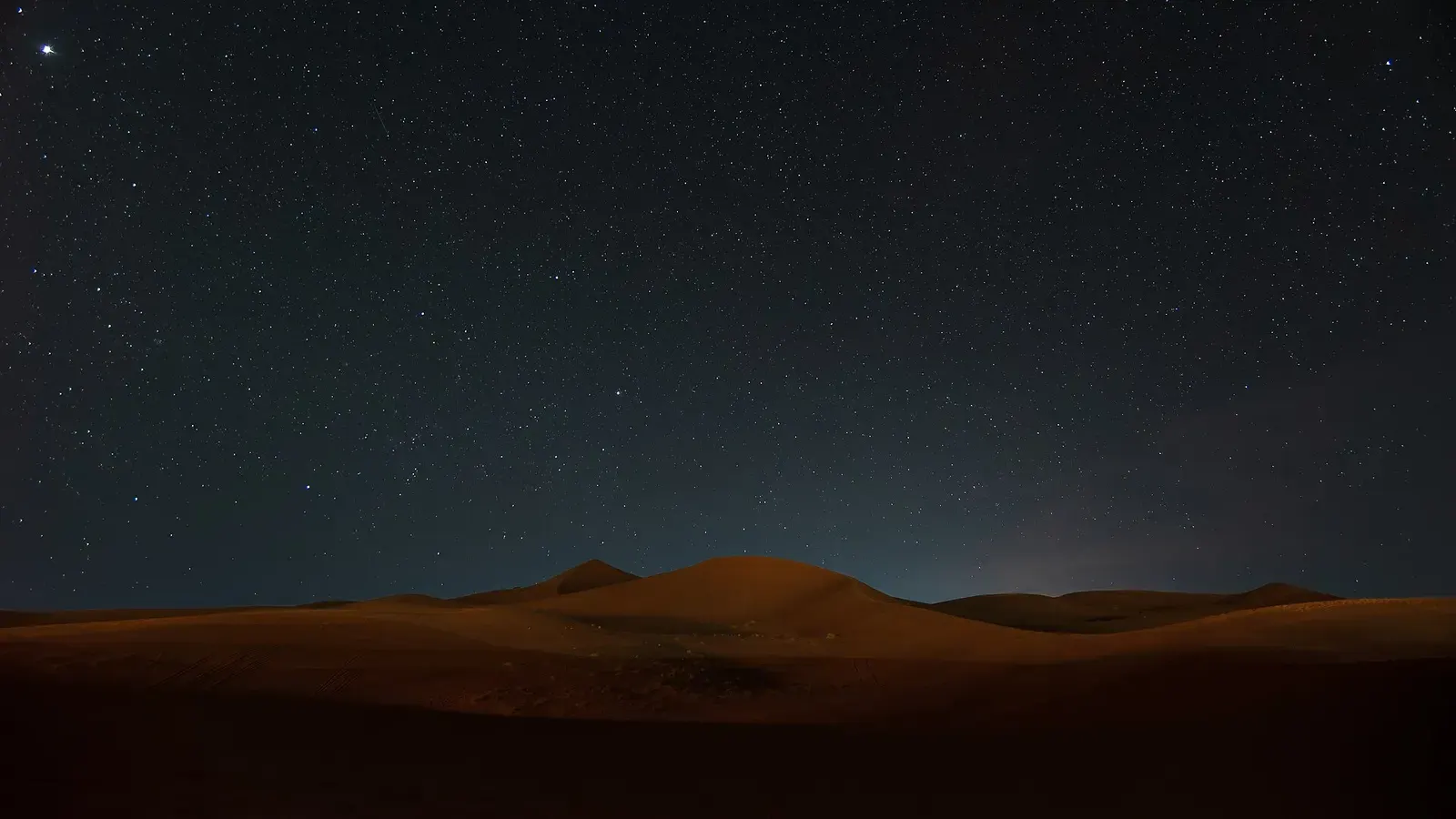
Winter skies: November to January
The galactic core is below the horizon at night, but winter skies are far from empty. You get Orion, the Pleiades, Taurus and Sirius, the brightest star in the night sky, plus the fainter outer band of the Milky Way running through Cassiopeia and Auriga. Nights are long, so you can start soon after dinner. They are also cold: see the temperatures below.
Meteor showers
The Perseids are the reliable summer show. NASA gives the peak as the night of 12 to 13 August, with the shower active into late August. In 2027 the moon reaches first quarter on 9 August, so on the peak nights it is a waxing gibbous that sets in the early hours of the morning. That leaves the last dark hours before dawn, which is also when Perseid rates are highest. Expect heat, though: August nights in the Draa valley stay around 25°C after afternoons above 40°C.
Night temperatures in the desert
Desert nights get cold faster than people expect, and stargazing means sitting still. These are average lows for Zagora (two datasets, so shown as ranges); open dunes with a breeze can feel colder.
| Months | Average night low | What to bring outside |
|---|---|---|
| December to February | about 4 to 8°C, close to freezing on the coldest nights | Warm jacket, hat, gloves, blanket to sit on |
| March, November | about 10 to 12°C | Fleece and windproof layer |
| April, October | about 13 to 17°C | Light sweater |
| May to September | about 17 to 27°C | T-shirt; a thin layer before dawn |
Ouarzazate, the nearest official weather station, has recorded -7°C in January. Our guide on what to wear in the Sahara desert Morocco has a full packing list.
Photographing the Sahara night sky
You do not need expensive gear to get a decent Milky Way photo, but you do need a tripod and manual settings.
- Tripod and wide lens. The wider and brighter the lens, the better: 14 to 24 mm at f/2.8 or faster is ideal. Phones with a night mode can work if you prop them on something stable.
- Manual focus. Autofocus fails in the dark. Use live view, zoom in on a bright star or planet and turn the ring until it is a sharp point.
- Starting settings. ISO 3200, widest aperture, 15 to 20 seconds. Adjust from there.
- Keep stars sharp. A common rule of thumb is the “500 rule”: divide 500 by your full-frame focal length to get a rough maximum exposure in seconds (about 25 seconds at 20 mm).
- Shoot RAW and use the self-timer or a remote to avoid shake.
- Use the dunes. A ridge line or a lit tent in the foreground gives scale. Ask before you light up anyone else’s tent.
- Mind the cold and sand. Batteries drain faster in winter, so carry spares in an inside pocket, and change lenses inside the tent, not in the wind.
Use a red light (or a torch covered with red tape) when you check settings, so you and everyone around you keep their night vision.
Erg Chigaga or Merzouga for stars?
Both can give excellent skies. Erg Chebbi near Merzouga can be reached on tarmac, which makes it the busier of the two, and you may share the view with other camps’ lights. Erg Chigaga takes longer to reach by 4x4 piste from M’hamid or Foum Zguid, and that extra distance is what you are paying for on a dark night. Our comparison of Erg Chebbi vs Erg Chigaga covers the other differences.
Planning your Morocco desert stargazing night
Check the new moon dates first, then the season, then book. If you can, stay two nights in the dunes, which doubles your chance of a clear, calm sky. See the best time to visit Sahara desert Morocco for the weather side, and when your dates are set, look at our Erg Chigaga luxury desert camp and Erg Chigaga tours.
Frequently asked questions
Can you see the stars in the Sahara in Morocco?
Yes, and on a clear, moonless night it is one of the best skies most visitors will ever see. The air south of the Atlas is very dry, and once you are past the last villages of the Draa valley or the Tafilalet there are few artificial lights. The main thing that spoils the view is the moon: around full moon only the brightest stars show. Aim for the week around a new moon.
When is the best time for stargazing in the Moroccan desert?
Pick dates close to a new moon, then choose the season for what you want to see. For the bright core of the Milky Way, go between May and August, when it is high in the south for much of the night. October to April gives longer, cooler nights and the winter constellations such as Orion. Avoid the three or four nights either side of a full moon.
Is Erg Chigaga good for stargazing?
Erg Chigaga is one of the most remote dune fields in Morocco that you can reach by 4x4, and that remoteness is what makes its night sky so good. The nearest village, M'hamid, is a long piste ride away, and the camps sit spread out among the dunes. On a moonless night the Milky Way is plainly visible to the naked eye. Ask your camp to keep outdoor lights low after dinner.
How cold is it at night in the Sahara in Morocco?
It depends on the month. From December to February, average lows in the Draa valley are about 4 to 8°C. Zagora rarely drops below about 0.5°C, so frost is rare there, but the coldest clear nights come close to freezing. In spring and autumn, nights sit around 10 to 17°C. In July and August they stay warm, around 25°C. For a long night of stargazing in winter, bring a warm jacket, hat and something to sit on.
What camera settings should I use for the Milky Way in Morocco?
Put the camera on a tripod, use the widest lens you have at its widest aperture (f/2.8 or brighter if possible), focus manually on a bright star, and start around ISO 3200 with an exposure of 15 to 20 seconds. Use the 500 rule (500 divided by the full-frame focal length) as a rough maximum to keep stars as points. Shoot in RAW and use a remote or the self-timer.
Where does the Sahara start in Morocco?
The Sahara is usually described as bounded to the north by the Atlas Mountains, so in Morocco the desert begins on their southern side. The big sand seas that visitors mean by 'the Sahara' are Erg Chebbi near Merzouga and Erg Chigaga beyond M'hamid. Agafay, near Marrakech, is a stony desert outside the Sahara. For stargazing, the farther south and the farther from towns, the darker the sky.
Sources we checked
- Moon phases 2027 (U.S. Naval Observatory, Astronomical Applications)
- Moon phases 2027, Marrakech (timeanddate.com)
- Galactic Center (Wikipedia)
- Perseids (NASA Science)
- Perseids (Wikipedia)
- Zagora, Morocco: climate data (Wikipedia, from climate-data.org)
- Average weather in Zagora (WeatherSpark)
- Ouarzazate climate and records (Wikipedia, NOAA/WMO data)
- Light pollution map (lightpollutionmap.info)
Keep exploring
Related pages
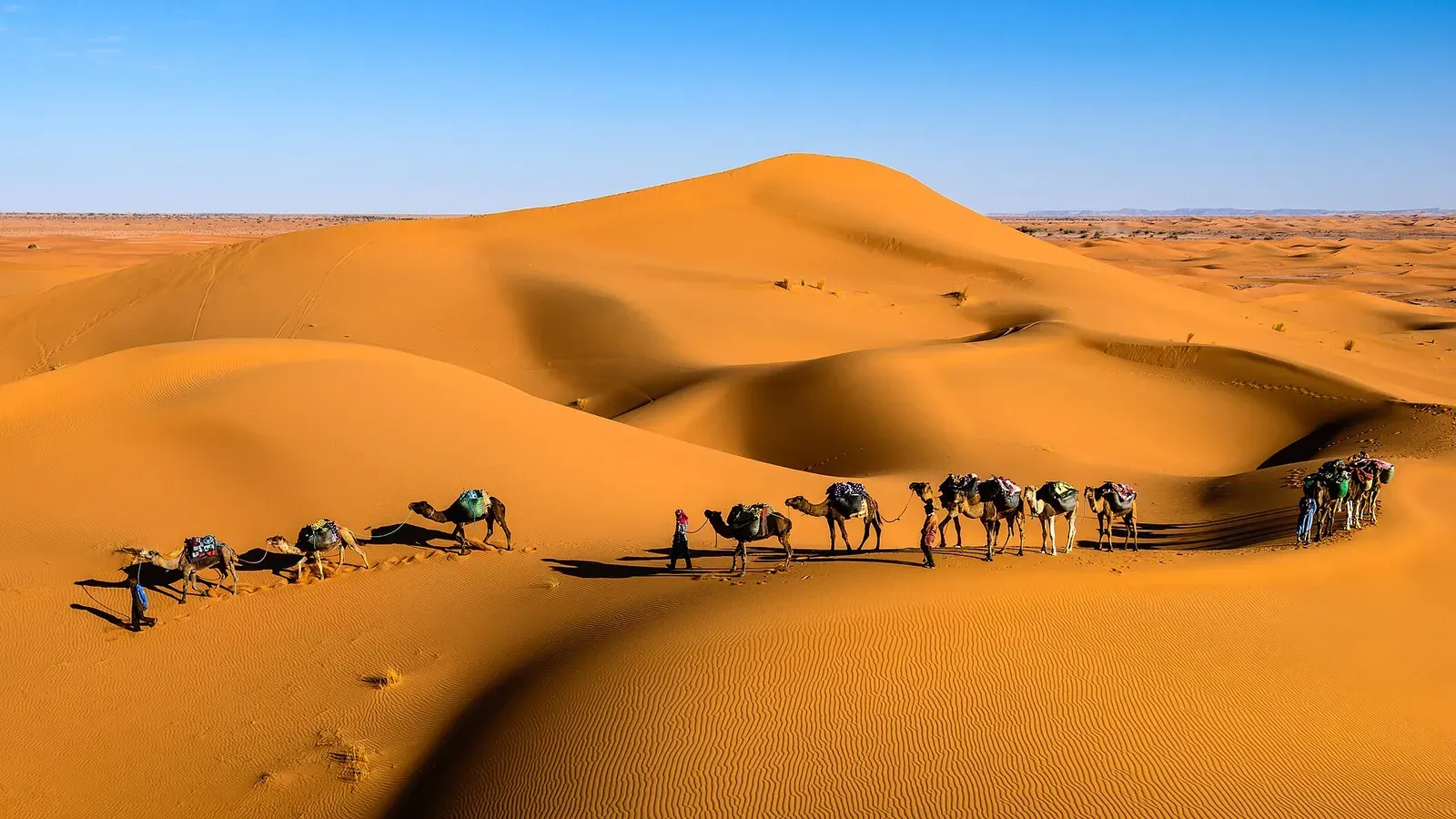 Erg ChigagaErg Chigaga guide: where it is, how high the dunes really are, the 4x4 piste from M'hamid, camp types, best months and how many days to plan.Read the guide
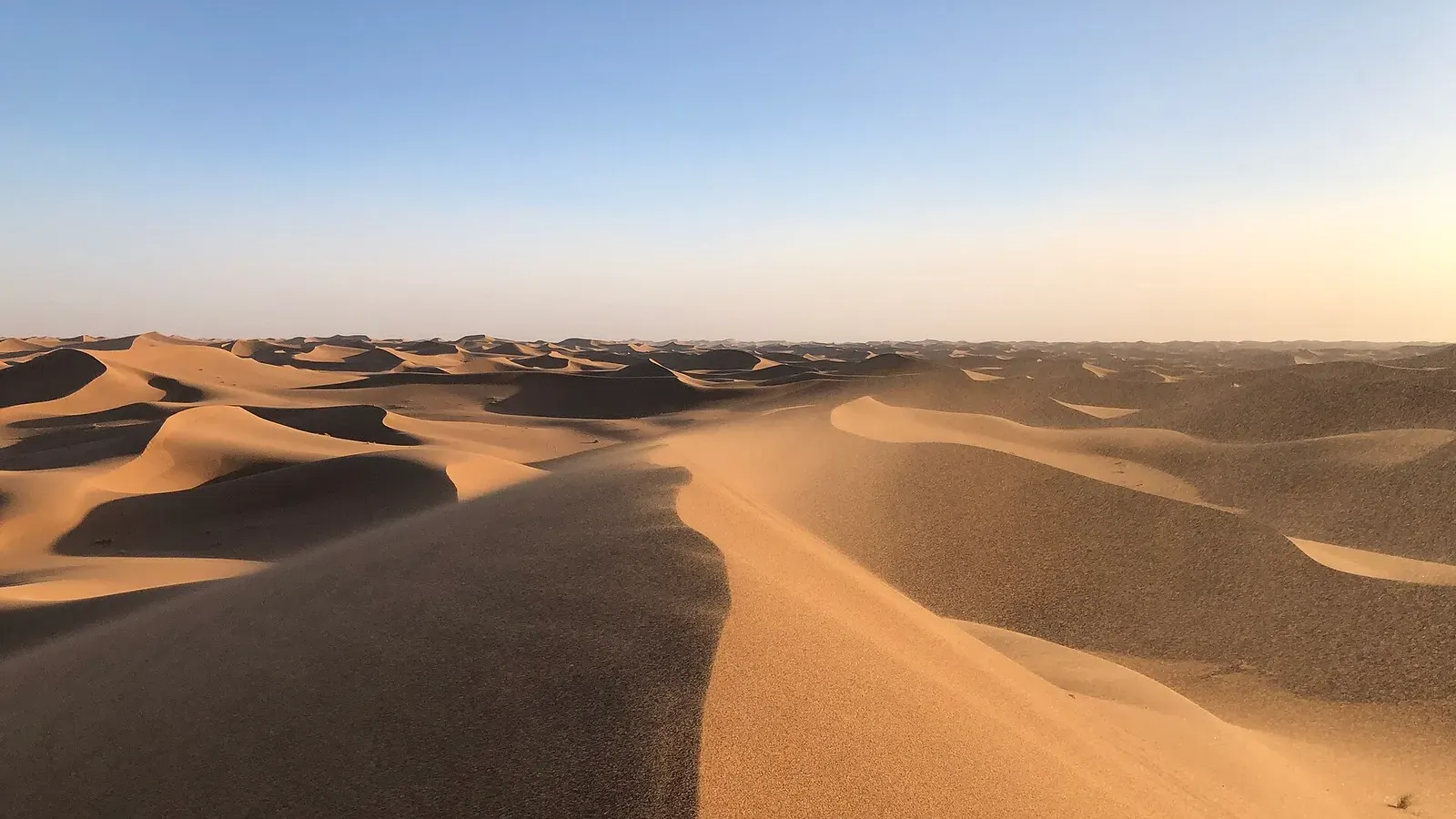 Best time to visit Sahara desert MoroccoThe best time to visit Sahara desert Morocco is October to November and February to April. Month-by-month temperatures, wind, Ramadan 2027, festivals.Read the guide
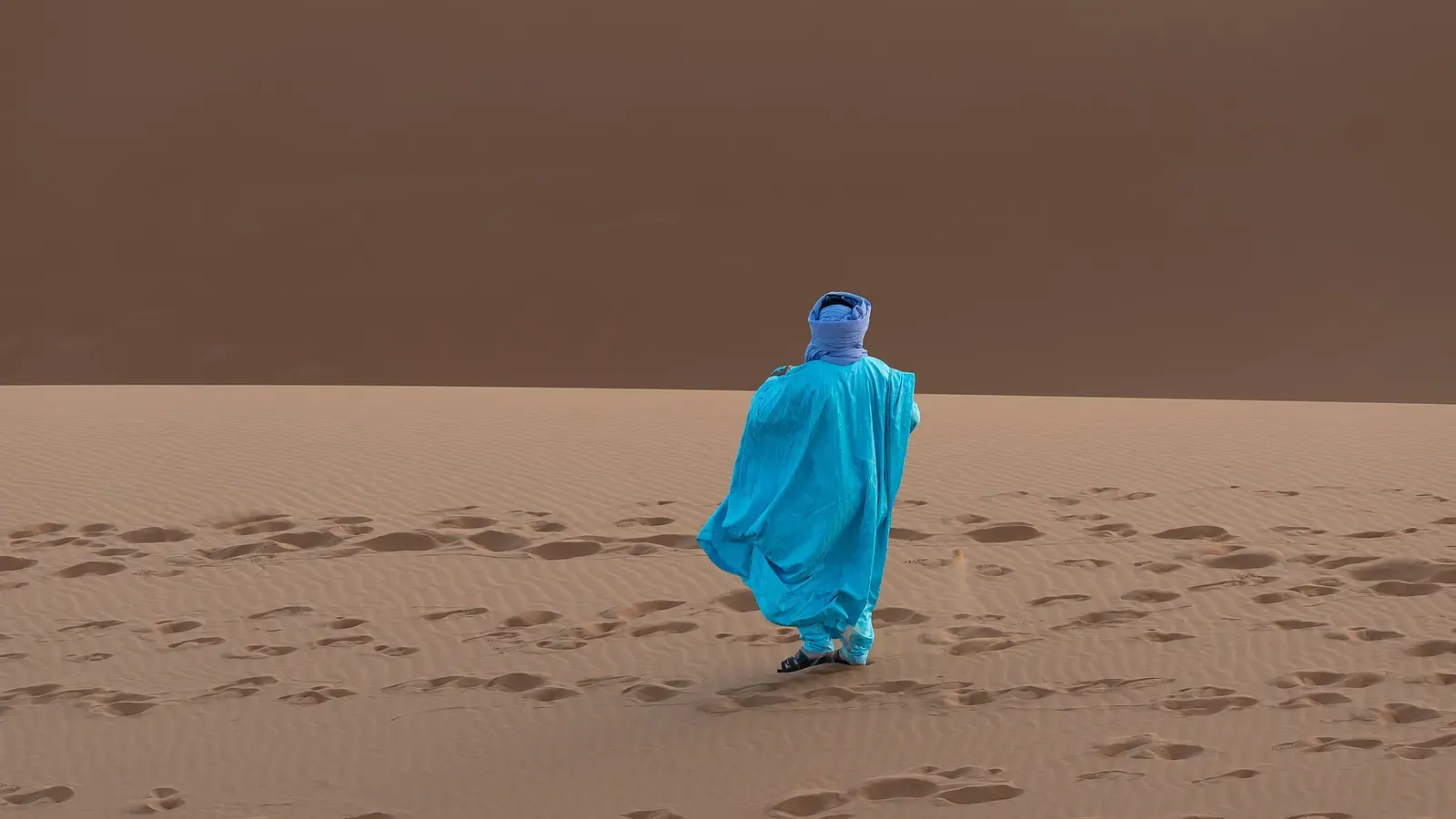 What to wear in the Sahara desert MoroccoWhat to wear in the Sahara desert Morocco: month-by-month temperatures, village dress, cheche, dune footwear, a full packing list and what to leave home.Read the guide
 Erg Chebbi vs Erg ChigagaErg Chebbi vs Erg Chigaga, compared honestly: access, drive times from Marrakech and Fes, dune height, crowds, camps and who each desert suits.Read the guide
 Camping in Morocco desertCamping in Morocco desert: nomad, standard and luxury camps, what a night is really like, night temperatures, wild camping rules and how to vet a listing.Read the guide
 Morocco desert activitiesMorocco desert activities by place and season: camel rides and treks, 4x4, quads, sandboarding, dune walks, Gnawa music, fossils, festivals and balloons.Read the guide