Travel guide
What to wear in the Sahara desert Morocco: a season-by-season guide
What to wear in the Sahara desert Morocco, in one line: loose, light, covering clothes for the day and a proper warm layer for the night. The desert south of Zagora swings hard between afternoon and midnight, so the right packing list depends more on the month than on style. This guide gives you the temperatures, the local dress customs and a list you can actually pack from.
What to wear in the Sahara desert Morocco: temperatures by month
There is no official weather station in the dunes themselves, so the figures below come from Zagora, the main town of the Draa valley and the gateway to M’hamid and Erg Chigaga. Two datasets (climate-data.org and WeatherSpark) give slightly different numbers, so we show both ends of the range. M’hamid, further south, runs about the same or a degree warmer at night.
| Month | Average high | Average low | What to wear |
|---|---|---|---|
| January | 19 to 20°C | about 4°C | Light layers by day, warm jacket and hat at night |
| February | about 22°C | 6 to 8°C | Same as January, nights a little milder |
| March | about 26°C | 10 to 12°C | T-shirt and long sleeves, fleece for the evening |
| April | about 31°C | 13 to 16°C | Sun protection becomes the priority; light sweater at night |
| May | 34 to 36°C | 17 to 20°C | Loose, breathable cotton or linen; thin layer after dark |
| June | 39 to 41°C | 21 to 24°C | Maximum sun cover; nights are warm |
| July | 42 to 45°C | 25 to 27°C | Light, loose, long; avoid the middle of the day |
| August | 41 to 44°C | 25 to 26°C | As July |
| September | 36 to 37°C | 20 to 22°C | Summer clothing, a light layer for late night |
| October | 30 to 31°C | 15 to 17°C | Comfortable days; a fleece for the camp |
| November | 24 to 25°C | about 11°C | Long sleeves, warm layer for the evening |
| December | 19 to 20°C | 5 to 6°C | Winter kit: jacket, hat, warm socks |
Averages hide the extremes. Ouarzazate, the closest official station, has recorded -7°C in January. Zagora is milder: WeatherSpark says it rarely drops below about 0.5°C, so nights near freezing are possible in midwinter, but frost is rare in the desert towns. At the other end, summer heatwaves can push past 45°C. If you want to choose your month first, read our guide to the best time to visit Sahara desert Morocco.
What to wear in the desert in Morocco, season by season
October to April: the layering season
This is when most people visit, and it is also when packing goes wrong most often. The afternoon feels like late spring in southern Europe; the night can feel like winter. Plan on three layers:
- a breathable base (T-shirt or long-sleeved top),
- a fleece or wool sweater,
- a windproof or insulated jacket for after sunset.
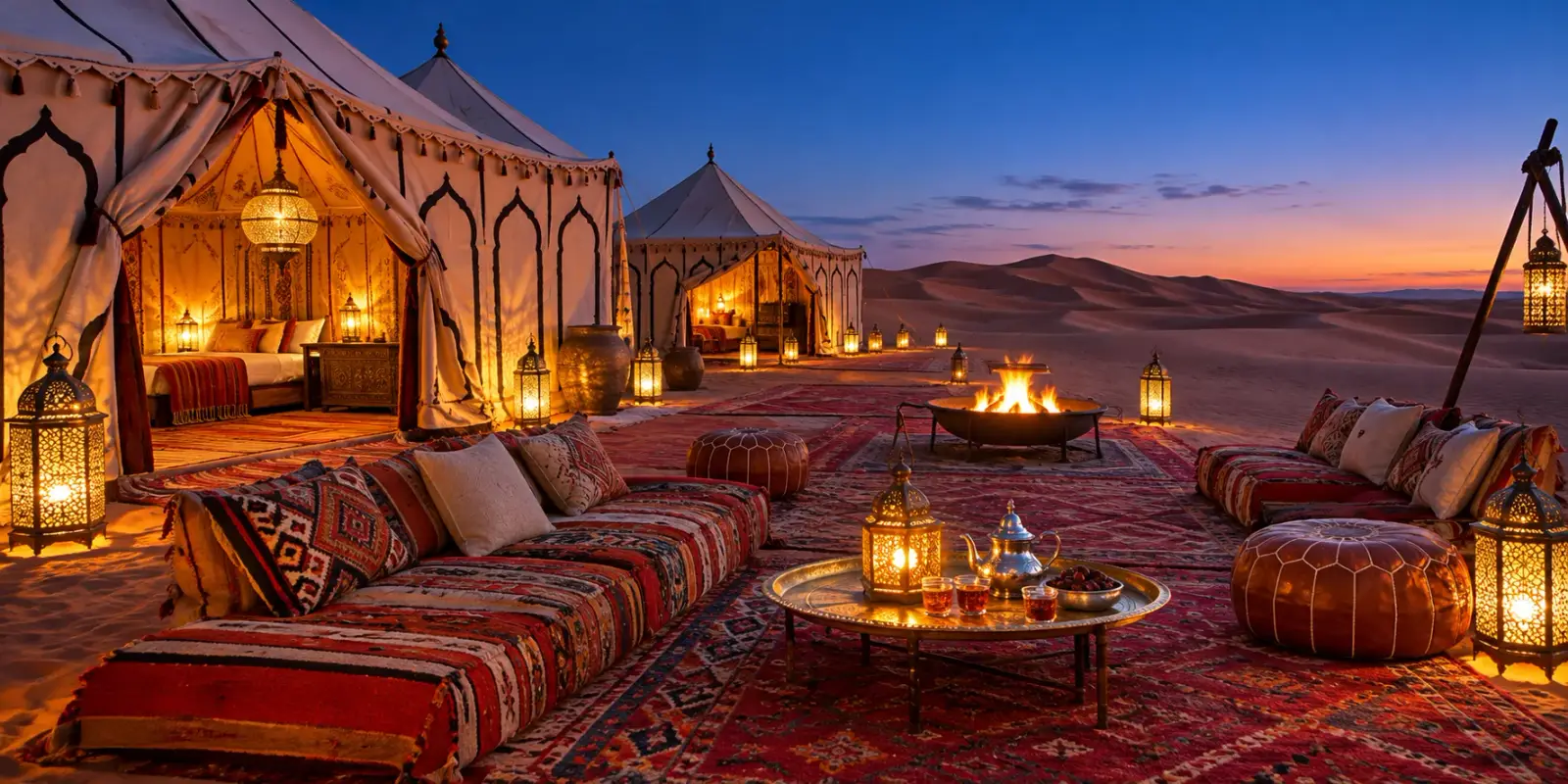
Add a beanie, a pair of thick socks to sleep in and something comfortable to wear around the fire. Desert camps supply bedding and blankets, but you will still want your own warm clothes for the hours between dinner and bed.
May to September: the heat season
From late spring onward the challenge is sun and heat, not cold. The NHS advises light clothes in hot weather, and in the desert that means covering up rather than stripping off. Loose long sleeves and long trousers in cotton or linen shade your skin and let air move. Pale colours reflect more sunlight than dark ones. Keep a light layer for late night, because even in July the hours before dawn feel cool after a 44°C afternoon.
Heat can also make you ill. The NHS lists headache, dizziness, nausea and excessive sweating as signs of heat exhaustion; if someone stops sweating, becomes confused or collapses, treat it as heatstroke and get help. Our guide on whether the Sahara desert in Morocco is safe covers heat and water in more detail.
Respectful dress in villages and towns
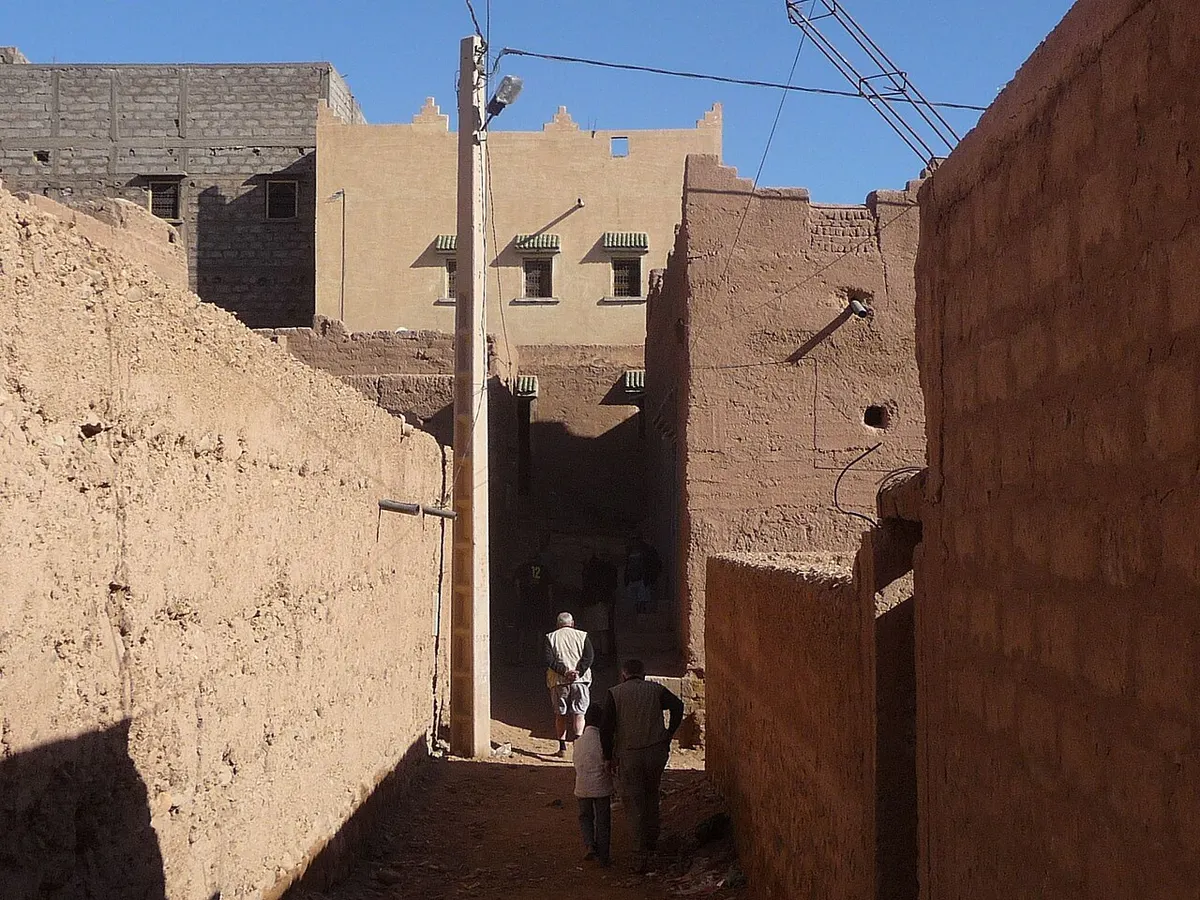
Morocco is a Muslim country, and in the oasis villages of the Draa valley people dress more traditionally than in central Marrakech. You will not be refused service for wearing shorts, but you will get a better welcome if you dress the way locals expect when you walk through a ksar, a market or a village street.
The UK government’s travel advice suggests loose clothing that covers arms, legs and chest, particularly for women, and Canada’s advice asks travellers to dress conservatively and respect religious and social customs (both as of November 2026). In practice that means:
- shoulders covered and no low necklines,
- trousers or skirts to the knee or longer,
- swimwear only at a hotel pool,
- a scarf in your bag if you visit a religious site that allows non-Muslims.
Men are held to the same idea: a T-shirt and long trousers or knee-length shorts in town, and shirt on when you leave the pool. In the open dunes and at camp, dress codes relax, though your guides will still appreciate the gesture.
Sun and sand protection: the cheche
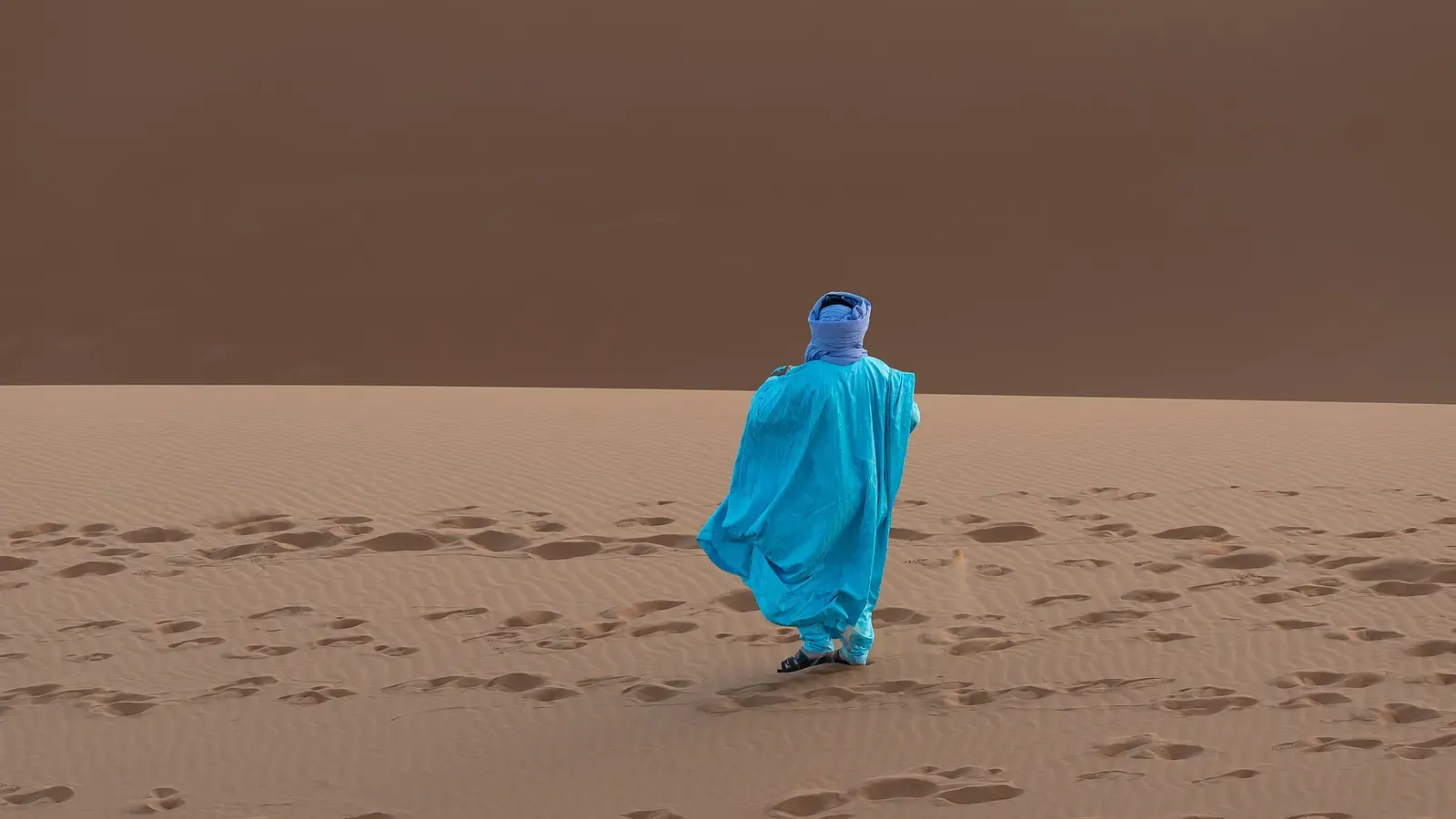
The single most useful item for the desert is a cheche (also written chèche or shesh): a long strip of cotton or linen wound around the head and face. Across the Sahara it is worn against sun and dry wind. Among the Tuareg it is called the tagelmust, and the indigo versions gave rise to the “blue men” nickname, because the dye rubs off on the skin.
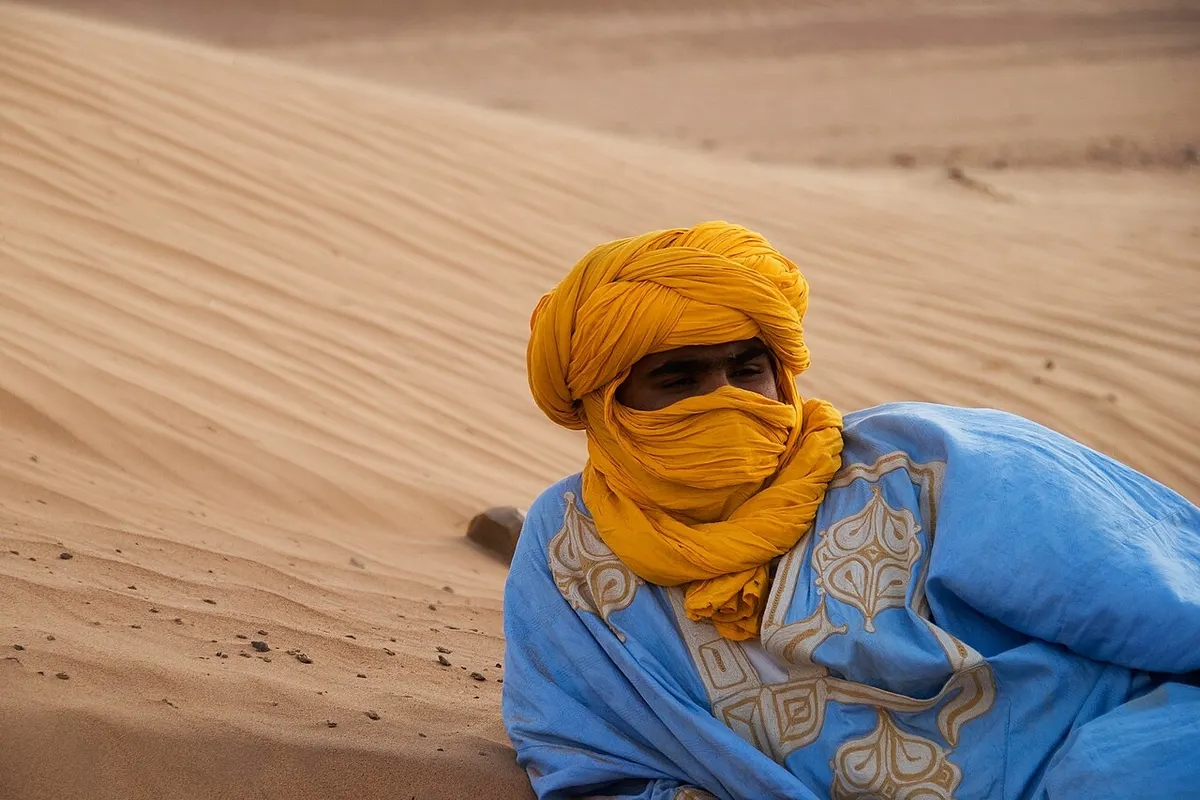
Why it beats a baseball cap: it shades your neck and ears, you can pull it over your nose and mouth when the wind lifts sand, and at night it becomes a scarf. You can buy a cheche cheaply in the souks of Marrakech, Zagora or M’hamid. Ask your driver or camel guide to show you a wrap; it takes about a minute and holds all day.
Also pack:
- sunglasses with good UV protection (wraparound styles keep out blowing sand),
- high-factor sunscreen and SPF lip balm,
- a wide-brimmed hat if you prefer it to a cheche,
- a buff or bandana for sandy, windy days.
If you wear contact lenses, bring glasses as well: fine sand and dry air can irritate your eyes.
Footwear for dunes and camp
Sand changes what works on your feet. Soft dunes are easiest barefoot, and in the cool of morning or evening that is how most people climb them. By early afternoon in the warm months the surface gets too hot to walk on comfortably, so you need something on your feet.
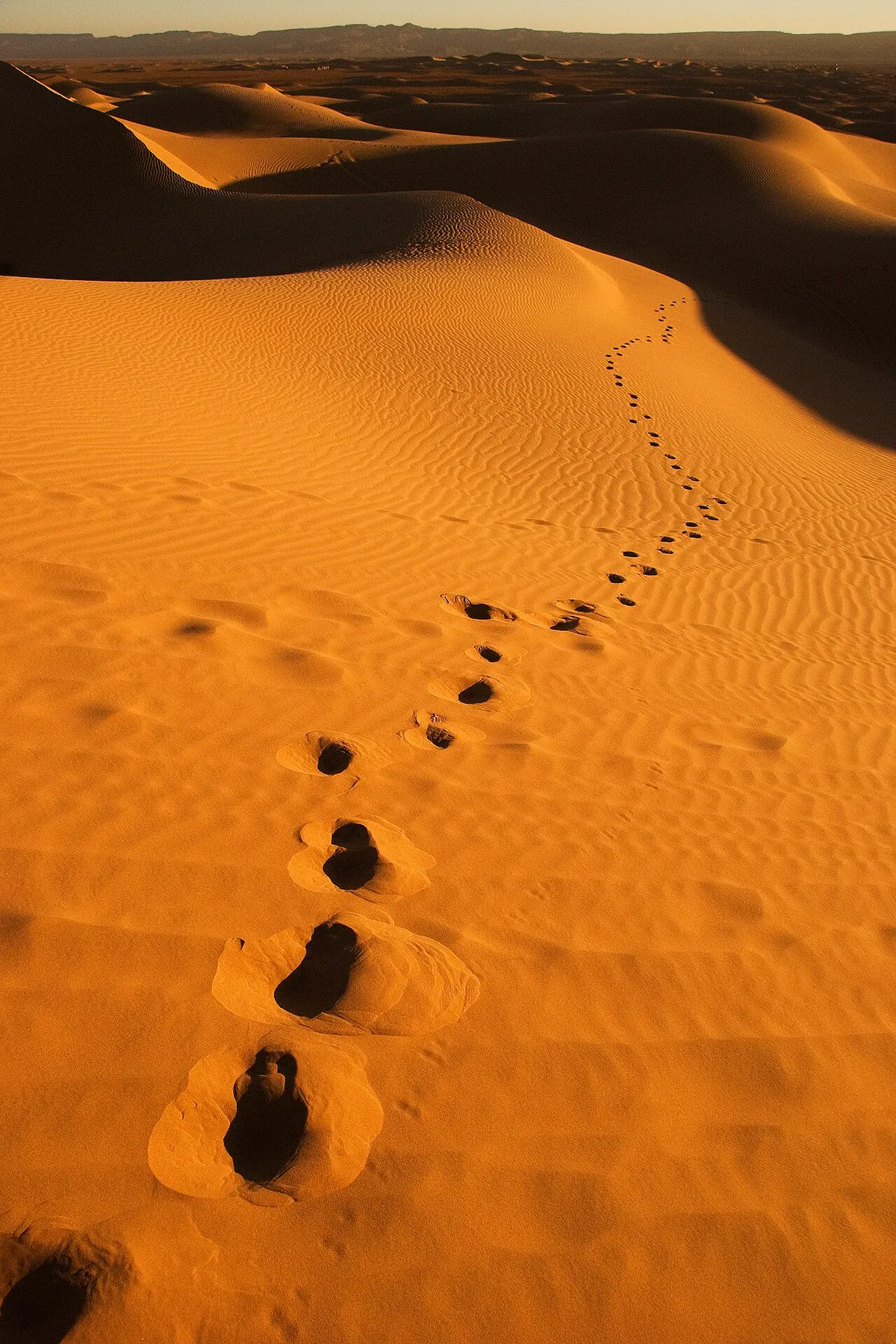
Sport sandals with a heel strap are the best all-rounder: sand falls straight out and they stay on when you climb. Light, breathable trainers suit the rocky hamada, the palm groves and walks around camp. After dark, wear closed shoes. Scorpions and thorny plants are part of the desert, and keeping a pair of shoes by your tent door is a sensible habit.
Leave the heavy leather hiking boots at home unless you are doing a multi-day camel trek Morocco itinerary with long stony stretches. Boots fill with sand and feel clumsy on steep dune faces. Gaiters help if you do bring them.
What to wear on a camel ride in Morocco
A camel saddle is a wide frame padded with blankets, and you sit astride it for anything from half an hour to several hours. Long, loose trousers are the answer: they stop chafing and protect your legs from the sun. Stretchy hiking pants, cotton trousers or the baggy “sarouel” trousers sold in every souk all work. Avoid short skirts and anything tight across the hips.
Most rides leave at sunset or sunrise, so the sun sits low and straight in your eyes. Wear sunglasses and your cheche. Keep your phone in a zipped pocket or a cross-body bag: things dropped from a camel tend to vanish into soft sand. If it is winter and you ride back to camp after dark, put your jacket on before you mount, because getting layers on and off up there is awkward.
What to pack for Morocco desert tour: the checklist
Most tours from Marrakech, Ouarzazate or Agadir leave your main luggage at a hotel or in the vehicle and ask you to take a small bag to camp. Pack that bag with this list.
| Item | Why | When |
|---|---|---|
| Cheche or large cotton scarf | Sun, wind, sand, warmth at night | All year |
| Loose long-sleeved tops (2) | Sun cover, respectful in villages | All year |
| Light long trousers (2) | Camel rides, sun, village dress | All year |
| Fleece or wool sweater | Evenings and early mornings | October to May |
| Warm jacket and beanie | Night temperatures near freezing are possible | December to February |
| Thick socks for sleeping | Cold nights in the tent | November to March |
| Sport sandals and light trainers | Dunes, rocky ground, camp | All year |
| Sunglasses, sunscreen, lip balm | Strong sun reflected off sand | All year |
| Head torch | Camp paths and toilets at night | All year |
| Refillable water bottle | Stay hydrated; ask your driver about refills | All year |
| Wet wipes and hand sanitiser | Water is limited at remote camps | All year |
| Small daypack or soft duffel | Easier than a suitcase on sand and in a 4x4 | All year |
| Power bank | Charging at camps is limited or absent | All year |
| Personal medicines and rehydration salts | Pharmacies are far from the dunes | All year |
| Zip bags | Keep sand out of phones and cameras | All year |
A head torch matters more than people expect. Away from towns the night is very dark, which is great for the sky (see our Morocco desert stargazing guide) and less great when you are looking for your tent.
What not to bring
- A hard-shell suitcase on wheels. The wheels jam in sand, and 4x4 boots are small.
- Expensive jewellery and watches. You will not need them, and it is one less thing to worry about.
- A drone. France’s travel advice (as of November 2026) says bringing a drone into Morocco is banned without prior authorisation for professional use, and customs can fine you and confiscate it.
- Heavy rain gear. The Draa valley averages about 60 mm of rain a year. A light windproof jacket covers the rare shower.
- Clothes for only one temperature. Even in July, bring one long-sleeved layer; even in January, bring sun protection.
Planning your trip
Once the bag is sorted, the next questions are usually how far the dunes are and which desert to choose. Our guide to the distance from Marrakech to Sahara desert covers drive times, and Erg Chigaga explains why the big dunes beyond M’hamid feel so remote. When you are ready, browse our Erg Chigaga tours and check what each one includes before you pack.
Frequently asked questions
What to wear in Morocco desert in winter?
From December to February, plan for two climates in one day. Afternoons in the Draa valley reach about 19 to 22°C, so a long-sleeved shirt and light trousers are enough. After sunset the temperature drops fast, with average lows around 4 to 8°C. Nights near freezing are possible in midwinter, although frost is rare in the desert towns. Bring a fleece, a warm jacket, a hat, socks for sleeping and a scarf. Camps provide blankets, but your own warm layer makes the evening fire far more pleasant.
What to wear on a camel ride in Morocco?
Wear long, loose trousers that let you sit astride a saddle without chafing: cotton trousers, light hiking pants or harem-style pants all work. Shorts rub against the saddle blanket. Add a long-sleeved top, sunglasses and a cheche or wide hat, because most rides happen at sunset or sunrise when the sun is low and in your face. Closed shoes or sturdy sandals are fine, and keep phones in a zipped pocket or a cross-body bag.
Can I wear shorts in the Sahara desert in Morocco?
In the dunes and at camp, nobody will stop you, but shorts are a poor choice: they leave your legs exposed to strong sun and rub on camel saddles. In villages, markets and towns such as Zagora or M'hamid, knee-length or longer is more respectful for everyone, and the UK and Canadian governments both advise conservative dress. Light, loose trousers are cooler than they sound and solve both problems.
Do I need a scarf or cheche in the Moroccan desert?
A cheche, the long head scarf worn across the Sahara, is the single most useful item you can bring. It shades your head and neck, covers your nose and mouth when wind lifts the sand, and doubles as a light blanket. You can buy one cheaply in Marrakech, Zagora or M'hamid, and your guide can show you how to wrap it. A large cotton scarf or buff does a similar job.
What shoes are best for walking on sand dunes?
On soft dunes, many people simply go barefoot in the morning and evening, when the sand is cool. During the day the surface gets very hot, so wear sandals with a back strap or light, breathable trainers. Heavy hiking boots fill with sand and feel clumsy on slopes. If you plan to walk around camp after dark, a pair of closed shoes protects your feet from thorns and the occasional scorpion.
What should I not bring to the Sahara desert?
Leave behind expensive jewellery, a hard-shell suitcase, a drone (France's travel advice says importing one without prior authorisation is banned and customs can confiscate it), and clothing that only works in one temperature. Large wheeled bags are awkward on sand and in 4x4 boots, so a soft duffel or backpack is better. Skip heavy rain gear: the Draa valley averages roughly 60 mm of rain a year. Pack light and leave the rest of your luggage at your hotel.
Sources we checked
- NHS: Heatwave, how to cope in hot weather
- Zagora, Morocco: climate data (Wikipedia, from climate-data.org)
- Average weather in Zagora (WeatherSpark)
- Average weather in Mhamid (WeatherSpark)
- Ouarzazate climate and records (Wikipedia, NOAA/WMO data)
- Climat à Ouarzazate (Climats et Voyages)
- Morocco travel advice: safety and security (GOV.UK)
- Travel advice and advisories for Morocco (Government of Canada)
- Conseils aux voyageurs Maroc : entrée et séjour (France Diplomatie)
- Chèche (Wikipédia)
- Heat exhaustion and heatstroke (NHS)
Keep exploring
Related pages
 Best time to visit Sahara desert MoroccoThe best time to visit Sahara desert Morocco is October to November and February to April. Month-by-month temperatures, wind, Ramadan 2027, festivals.Read the guide
 Is the Sahara desert in Morocco safe? Advisories, real risks and how to manage themIs the Sahara desert in Morocco safe? US, UK, French and Canadian advice as of November 2026, plus the Algerian border, heat, scorpions and snakes.Read the guide
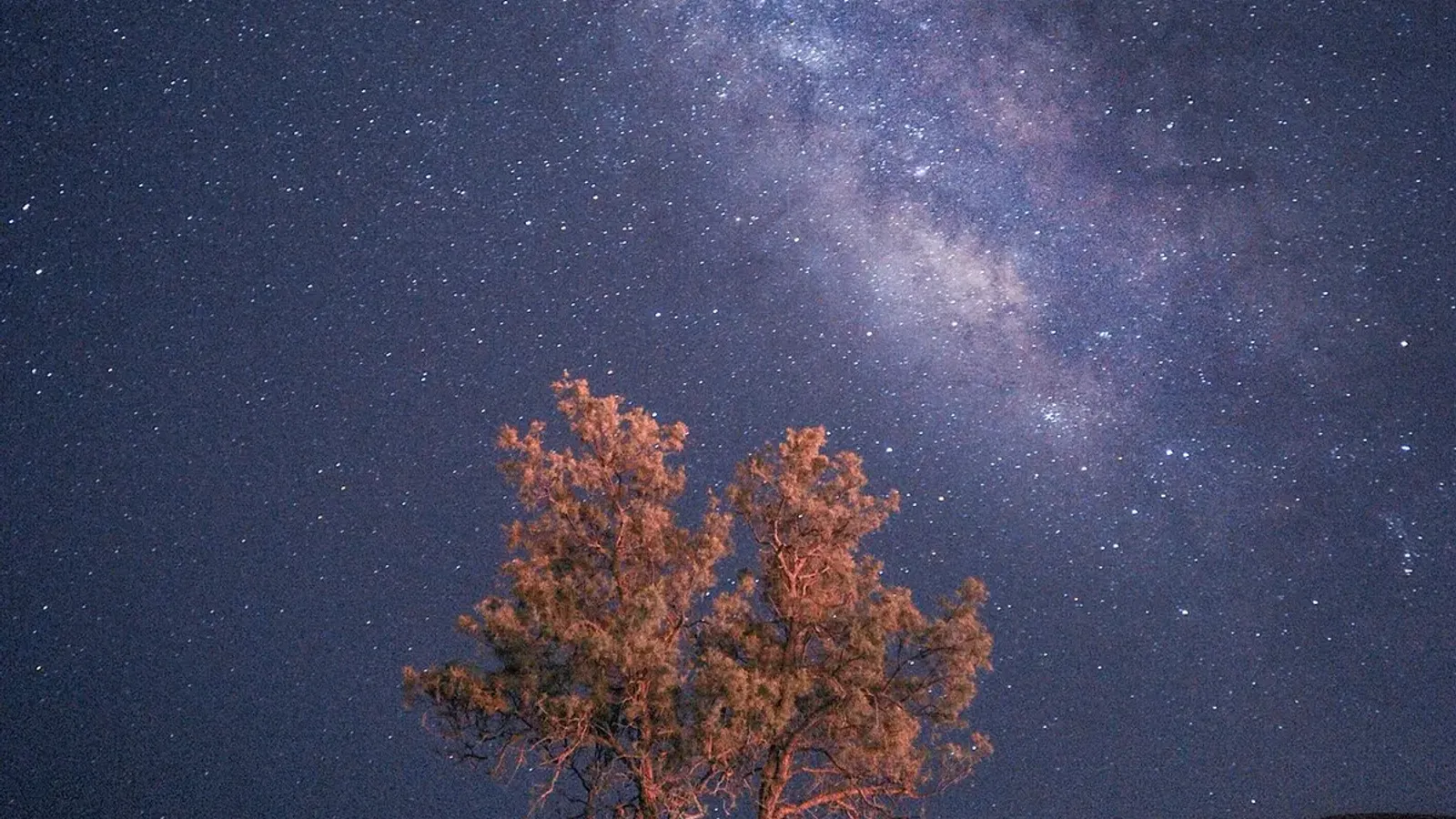 Morocco desert stargazingMorocco desert stargazing guide: why the Sahara sky is so dark, 2027 new moon dates, when to see the Milky Way, night temperatures and camera settings.Read the guide
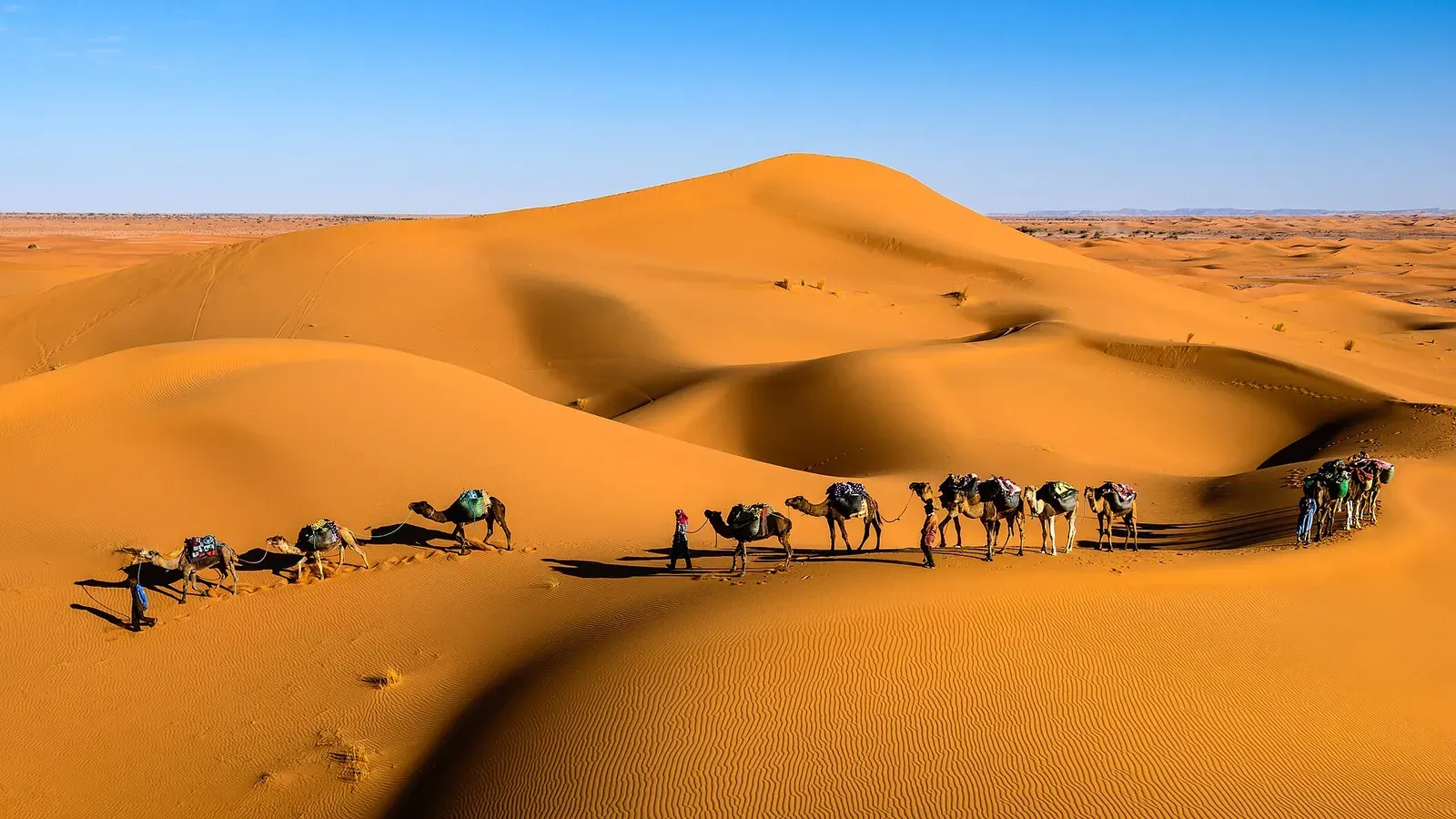 Erg ChigagaErg Chigaga guide: where it is, how high the dunes really are, the 4x4 piste from M'hamid, camp types, best months and how many days to plan.Read the guide
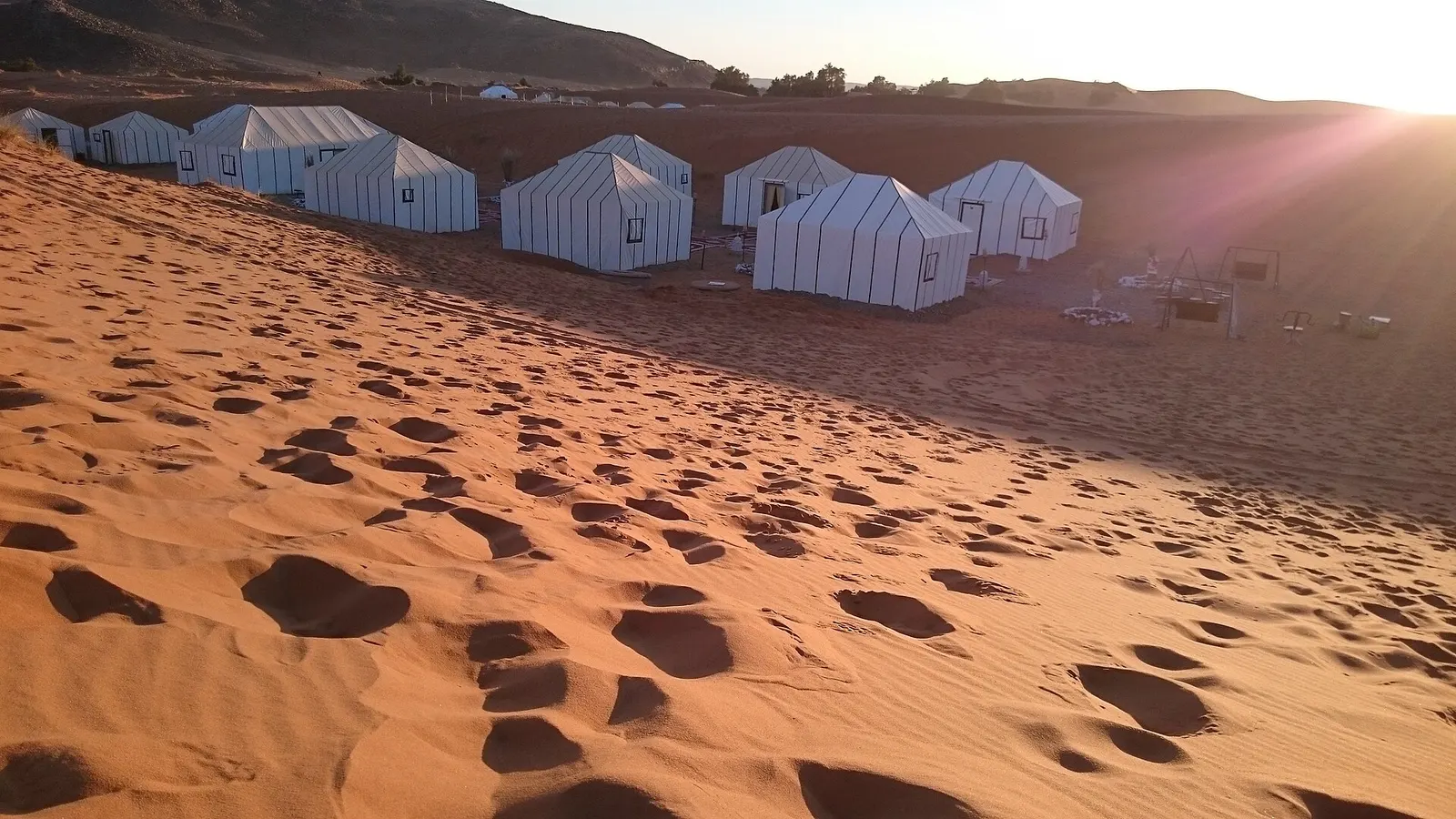 Camping in Morocco desertCamping in Morocco desert: nomad, standard and luxury camps, what a night is really like, night temperatures, wild camping rules and how to vet a listing.Read the guide