Travel guide
Is the Sahara desert in Morocco safe? Advisories, real risks and how to manage them
The short answer to “is the Sahara desert in Morocco safe” is yes for most travellers on the usual routes, with a few real risks you should plan for. None of the US, UK, French or Canadian governments advises against visiting the main desert areas around Merzouga, Zagora, M’hamid or Erg Chigaga (as of November 2026). The risks worth planning for are heat, roads and the occasional sting, plus one specific issue near Erg Chigaga: the closed Algerian border a few dozen kilometres to the south.
Is the Sahara desert in Morocco safe? What the advisories say (November 2026)
Each government words its advice differently, so here is a side-by-side summary. Read the originals before you travel: they change, and the links are in the sources below this guide.
| Government | Overall level for Morocco | Points relevant to the desert | Last updated |
|---|---|---|---|
| United States (State Department) | Level 2 of 4: Exercise Increased Caution, due to terrorism | No Moroccan region singled out in the advisory summary | 3 September 2026 |
| United Kingdom (FCDO) | No areas advised against | Land and sea borders with Algeria are closed and patrolled; crossing without authorisation is illegal. Western Sahara covered separately | 19 August 2026 |
| France (France Diplomatie) | Most of Morocco in normal vigilance | “Vigilance renforcée” (yellow) along the southern stretch of the Algerian border and in Western Sahara; all travel along the Mauritanian border strongly advised against; avoid off-road driving | Security page 15 September 2026, map 11 March 2026 |
| Canada | Exercise a high degree of caution, due to terrorism | Avoid all travel within 20 km of the Algerian border; use official guides and get local tourist advice before heading into southern desert areas | 26 May 2026 |
All four list terrorism as a nationwide risk, not a desert-specific one. The UK advice says terrorists are likely to try to carry out attacks in Morocco and that the authorities regularly disrupt extremist cells. That is the same background risk you accept in Marrakech or Fes.
One more official notice concerns the drive rather than the desert. As of November 2026, Spain’s foreign ministry advises its travellers not to go to the provinces of Al Houz (Al Haouz) and Taroudant, where access is still difficult after the September 2023 earthquake. The notice is about earthquake damage, not crime or terrorism, but it touches the usual routes south: the N9 from Marrakech to Ouarzazate over the Tizi n’Tichka crosses Al Haouz, and the N10 from Agadir to Taliouine crosses Taroudant. Check your own government’s advice before you travel.
Is Erg Chigaga safe? The Algerian border question
This is where honest advice matters. Erg Chigaga and M’hamid sit close to the Algerian border. Measured on OpenStreetMap border data, M’hamid is about 25 km in a straight line from the border, and the centre of the Erg Chigaga dune field about 25 to 30 km. Foum Zguid and Zagora are farther, at roughly 65 to 70 km.
What that means in practice:
Canada advises against all travel within 20 km of the Algerian border, citing military presence and uncertainty about where the line runs. Erg Chigaga and the M’hamid piste sit just outside that band, but not by much. France shades the southern stretch of the Algerian border yellow (“vigilance renforcée”); its text does not name M’hamid, Erg Chigaga or Foum Zguid, and its map is too coarse to place them precisely inside or outside the band. The UK says the border is closed and patrolled and that you must not try to cross it. The US advisory summary does not name any Moroccan border area.
So the plain reading is this: the established tourist route between M’hamid, Erg Chigaga, Lake Iriki and Foum Zguid is in regular use and is not on any government’s “avoid” list, but it runs through a border region where you should not wander. Do not drive or walk south toward the border, do not go exploring off the known tracks, and travel with a driver who knows the area. If any of these advisories changes, take the new version over this page.
Is it safe to drive from M’hamid to Erg Chigaga?
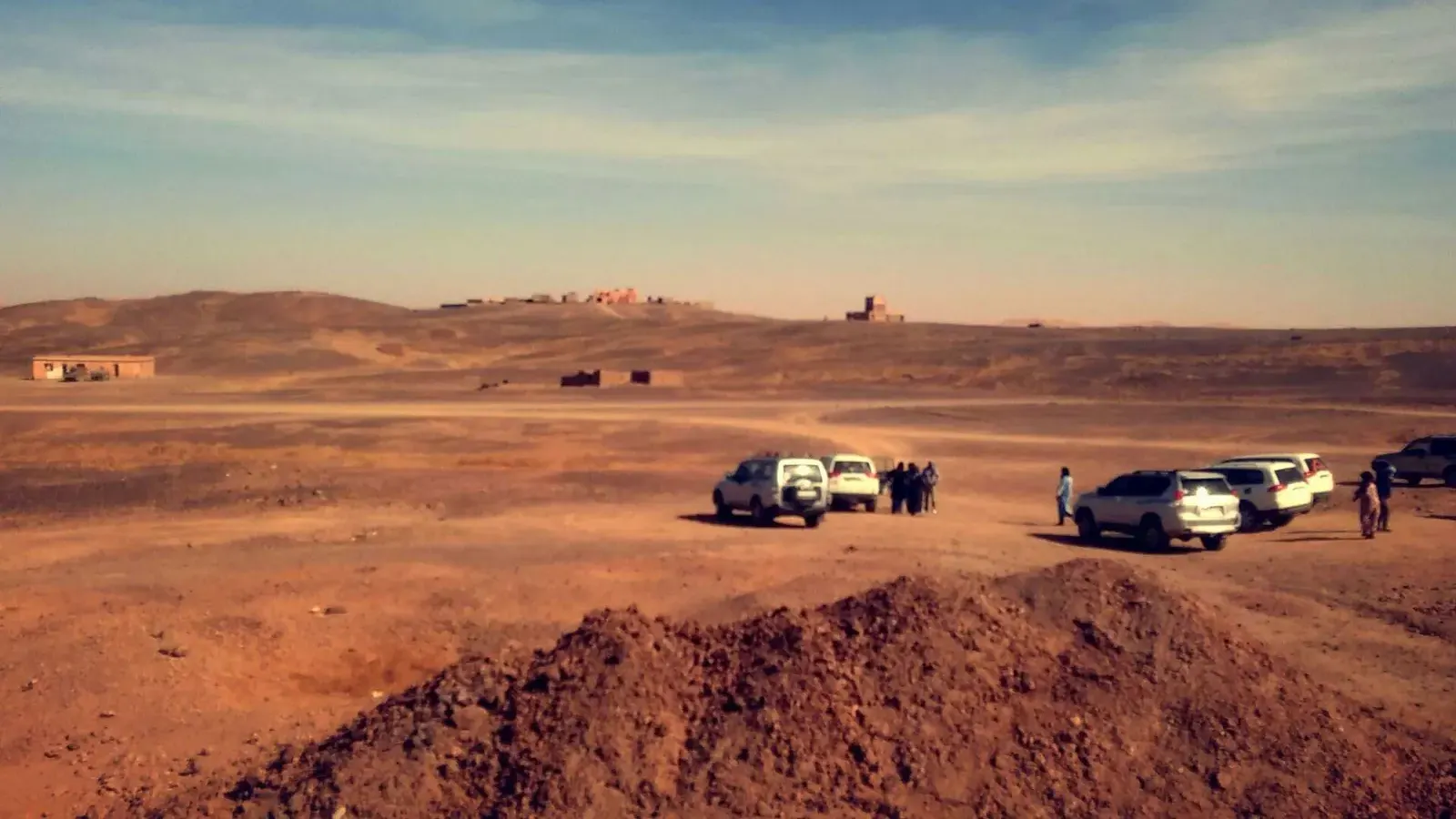
There is no tarmac beyond M’hamid. The way to Erg Chigaga is a 4x4 piste across stony plains, soft sand and dry lake beds, and tracks shift after windy days. France’s advice describes the tracks linking main roads as poorly maintained and tells travellers to avoid off-road driving, while Canada asks you to use only four-wheel-drive vehicles off-road and to carry enough supplies and water.
With a local driver, this is a routine transfer that camps and agencies run daily. Driving it yourself is another matter: a standard rental car will get stuck, mobile signal is patchy, and a breakdown means a long wait. If you insist on self-driving, use a high-clearance 4x4, carry spare water, fuel and a tyre, travel with a second vehicle and tell someone your route. Our guide on how to get to Erg Chigaga compares the M’hamid and Foum Zguid approaches.
Back on the tarmac, the bigger statistical risk is the road itself. The UK advice warns that night driving is dangerous because of poor lighting, pedestrians and animals, and that rural and mountain roads get hazardous in bad weather. Plan long drives in daylight, especially the N9 over the Tizi n’Tichka pass.
Heat and dehydration
From May to September, average afternoon highs in Zagora run from about 34°C to 45°C, and heatwaves go higher. Of all the risks on this page, heat is the one you are most likely to meet.
The NHS describes heat exhaustion as tiredness, dizziness, headache, nausea, cramps, heavy sweating and strong thirst; move the person somewhere cool, give water or rehydration drinks and cool their skin, and they should improve within 30 minutes. Heatstroke is different and is an emergency: very high temperature, hot skin that has stopped sweating, confusion, fast breathing, seizures or collapse.
Simple rules keep you out of trouble:
- do camel rides and dune walks early and late, and rest in shade in the middle of the day,
- drink small amounts often rather than large amounts at once,
- cover up with loose clothing and a head scarf (see what to wear in the Sahara desert Morocco),
- carry oral rehydration salts.
Scorpions in the Moroccan desert
Scorpions are the venomous animal Moroccan health authorities worry about most. The Health Ministry recorded 20,583 declared stings in 2025 with a case fatality rate of 0.13%, down from over 2% before the national control strategy began. Most stings are mild: in a study of stings in El Kelaa des Sraghna province by poison centre researchers, 88% caused only local signs such as pain. The serious cases are concentrated in young children, and in summer: stings peak from May to September, mostly in the evening and at night.
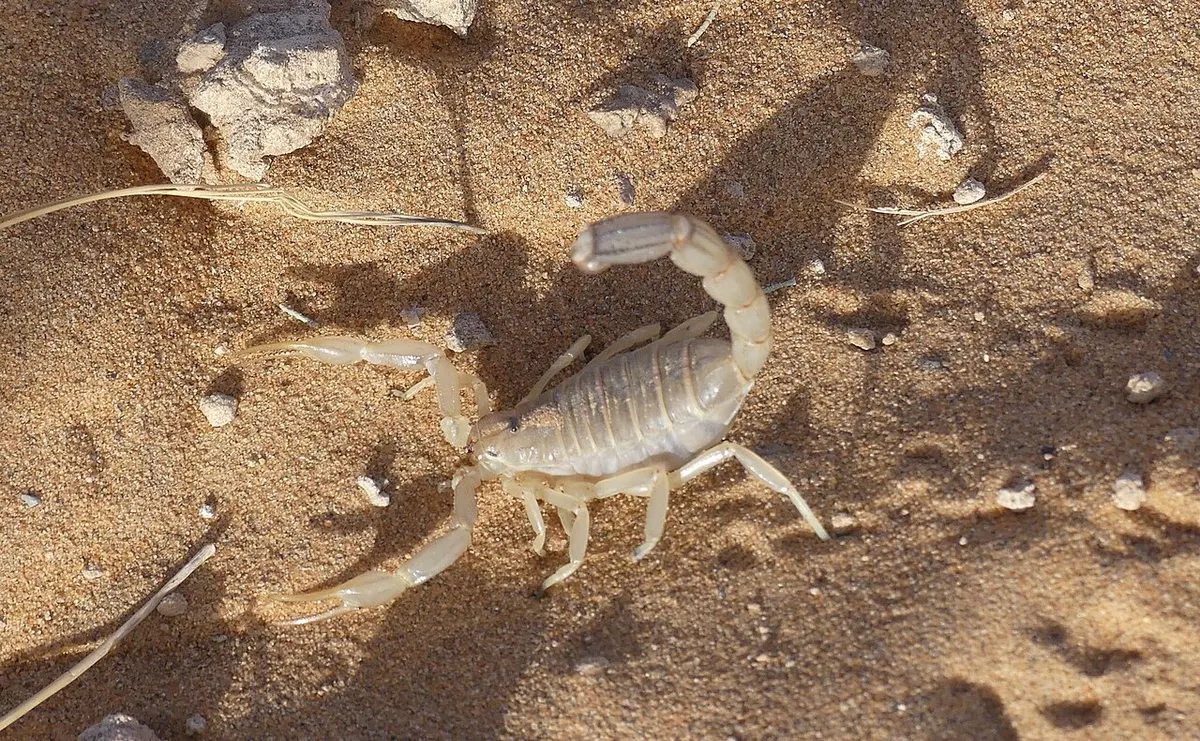
Several potentially dangerous species are recorded in the Draa valley, including at Zagora, Tagounite and M’hamid: Androctonus amoreuxi, Androctonus liouvillei and Hottentotta gentili. The most dangerous Moroccan species, Androctonus mauritanicus, lives on the Atlantic plains, not in the south-eastern desert.
Prevention is mostly habit: shake out shoes, clothes and sleeping bags, wear closed shoes and use a torch after dark, and never put your hands under stones or wood. If someone is stung, Moroccan health guidance is to go straight to the nearest health centre (take a child directly to hospital), note the time and the scorpion’s size and colour, and not cut the wound, suck it, apply a tourniquet or use traditional remedies. Morocco’s poison centre (CAPM) runs a 24-hour line on 080 100 01 80.
Snakes in the Sahara desert in Morocco
Morocco has eight venomous snake species. Two are typical of the desert proper. The Saharan horned viper (Cerastes cerastes) lives across the pre-Saharan and Saharan south and prefers stony ground to big dune fields. The smaller Sahara sand viper (Cerastes vipera) is a dune specialist that has been recorded at Erg Chebbi near Merzouga. Both are mainly active at night in the warm months and spend the day buried or under rocks. Closer to Ouarzazate and Agdz, the Moorish viper (Daboia mauritanica) and the Egyptian cobra (Naja haje) have also been recorded.
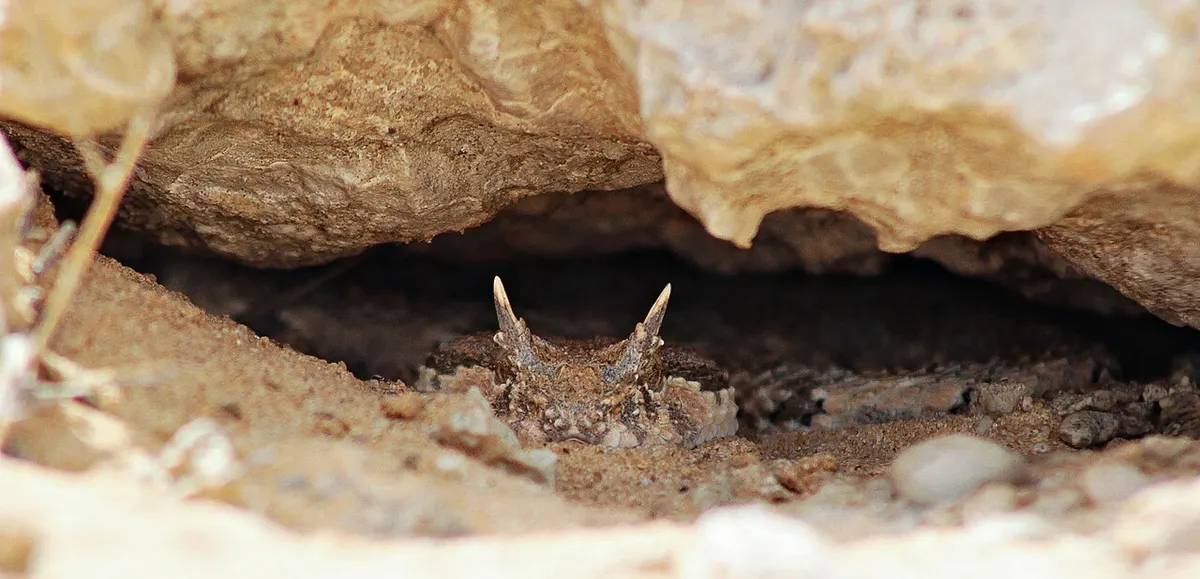
Most visitors never see a snake. Nationally, Morocco’s health authorities count a few hundred snakebites a year (405 in 2025). Reduce the odds by wearing closed shoes and using a torch at night, and by leaving any snake you see alone. If someone is bitten, the WHO advice is to keep them still, immobilise the limb, remove rings and get to a health facility as fast as possible. Do not use a tight tourniquet, cut the wound or try to suck out venom.
Sandstorms and wind
Dust and sand storms do occur in southern Morocco. Research on North African dust shows emission peaks in spring north of 23°N (all of Morocco lies north of that line), but strong wind events also happen in summer. In June 2024, for example, Moroccan meteorologists issued an orange alert for gusts of 75 to 90 km/h with dust storms in Ouarzazate, Zagora, Tata and Errachidia.
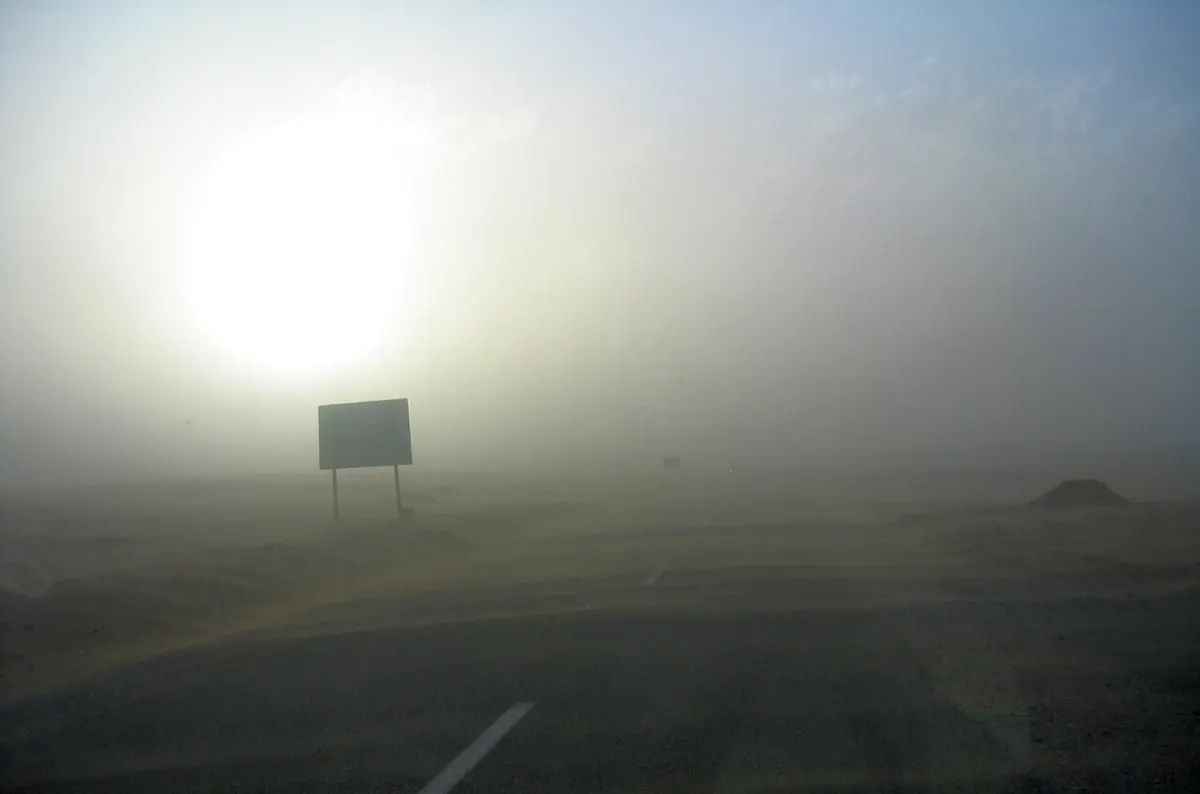
A storm is unpleasant rather than dangerous if you sit it out. Visibility on roads and pistes can drop to almost nothing, so a good driver will stop and wait. Wrap your cheche over your nose and mouth, wear sunglasses, and keep cameras sealed.
Choosing a licensed guide or agency
A well-run trip removes many of the risks above: a sound vehicle, a driver who knows the piste, a camp with a plan for bad weather. The UK warns about fake guides and suggests checking for an official badge; Canada recommends official guides suggested by hotels, agencies or tourist authorities. Before you book, check:
- that the company is a registered travel agency or uses licensed guides,
- recent independent reviews that mention the same route and camp,
- what happens if the weather turns or a vehicle breaks down,
- that seat belts work in every seat.
For quad biking and other activities, the UK advises wearing a helmet and checking that your insurance covers them.
Women travellers
The UK, French and Canadian advisories all note that women, especially travelling alone, may face unwanted attention that can turn into harassment. Standard precautions help: dress modestly in towns and villages, book with a reputable agency, share your itinerary, and do not accept unplanned detours. At camp, a private tent and a torch by the bed are reasonable requests.
Health: water, vaccines and dogs
UK travel health experts advise drinking bottled, boiled or filtered water in Morocco, and desert camps usually supply bottled water. The CDC recommends hepatitis A and typhoid vaccination for most travellers to Morocco, on top of routine vaccines, so talk to a travel clinic well before you leave.
Dogs are a more common worry than snakes. The CDC says rabid dogs are commonly found in Morocco, and France’s advice warns that packs of stray dogs are a recurring threat to pedestrians, particularly in the south. Seek medical care immediately after any bite or scratch.
Finally, remember the distance: Erg Chigaga is hours from a hospital. Bring your personal medicines and make sure your insurance covers medical evacuation.
Emergency numbers in Morocco
Police: 19. Protection civile (fire, rescue and ambulance): 15. Gendarmerie royale, which covers rural areas and roads: 177. SAMU for medical emergencies: 141. Some foreign advisories, including the UK’s, list 190 for police and 150 for fire and ambulance instead. The CAPM poison line is 080 100 01 80. Mobile coverage fades in the open desert, so your driver or camp is usually the fastest way to raise help.
Is the Morocco desert safe for families?
Yes, with more care around heat and stings, since children are the group at highest risk from scorpions. Our guide to the Morocco desert with kids covers ages, drive times and camp comfort.
Plan a safe trip
Whether the Sahara desert in Morocco is safe for you depends mostly on how the trip is run, so read up on the place first: Erg Chigaga and Mhamid Morocco explain the terrain and the route. When you are ready, compare our Erg Chigaga tours and ask any operator, us included, how they handle vehicles, water and emergencies.
Frequently asked questions
Is Erg Chigaga safe?
Erg Chigaga is visited every day by tour groups and camp guests, and none of the US, UK, French or Canadian advisories names it as an area to avoid (as of November 2026). It does lie roughly 25 to 30 km from the closed Algerian border, and Canada advises against all travel within 20 km of that border. Go with an experienced local driver, stay on the established tracks and camps, and do not head south toward the border.
Is it safe to drive from M'hamid to Erg Chigaga?
It is a 4x4 piste, not a road. The tracks are unmarked, sandy in places and change with the wind, and France's travel advice warns that tracks linking main roads are poorly maintained and that off-road driving should be avoided. With a local driver who knows the route, it is a routine trip. Self-driving a rental car is a bad idea; a self-drive 4x4 needs experience, spare water and fuel, and ideally a second vehicle.
Are there snakes in the Sahara desert in Morocco?
Yes. The Saharan horned viper (Cerastes cerastes) lives across the pre-Saharan and Saharan south, and the smaller Sahara sand viper (Cerastes vipera) has been recorded at Erg Chebbi. Both are mainly active at night in the warm months and spend the day buried in sand or under rocks. Visitors rarely see them. Wear closed shoes after dark, use a torch, and never turn over stones with bare hands.
Are scorpions dangerous in the Moroccan desert?
Some species in the Draa valley, such as Androctonus amoreuxi and Androctonus liouvillei, have potent venom. Most stings in Morocco are mild, and the national case fatality rate in 2025 was 0.13%, but young children are at much higher risk. Shake out shoes and clothes, use a torch at night and do not put hands under rocks. If someone is stung, go straight to the nearest health centre and do not cut or tie the limb.
Is Ouarzazate safe for tourists?
Ouarzazate is a busy film and tourism town on the main route to the desert, and no government advisory singles it out (as of November 2026). The general Morocco advice applies: watch for petty theft, use official guides, and be careful on the roads at night. The UK government notes that night driving is dangerous because of poor lighting, which matters on the N9 over the Tizi n'Tichka pass from Marrakech.
Is the Morocco desert safe for solo female travellers?
Many women travel to the desert alone or in pairs. The UK, French and Canadian advisories all warn that women, especially alone, may face unwanted attention or harassment, so the usual precautions apply. Book through a reputable, licensed agency with good recent reviews, dress modestly in villages, and share your itinerary with someone at home. At camps, ask for your own tent and keep a torch and phone with you.
Can you drink the water in the Sahara?
Drink bottled, boiled or filtered water. UK travel health experts advise travellers in Morocco to stick to these options, and desert camps usually supply bottled water. Bring a refillable bottle and ask your driver where to refill it. In heat, sip regularly rather than waiting until you are thirsty, and add oral rehydration salts if you sweat heavily or have an upset stomach.
Sources we checked
- Morocco Travel Advisory, Level 2 (U.S. Department of State)
- Morocco travel advice: regional risks (GOV.UK)
- Morocco travel advice: safety and security (GOV.UK)
- Morocco travel advice: getting help (GOV.UK)
- Conseils aux voyageurs Maroc : sécurité (France Diplomatie)
- Travel advice and advisories for Morocco (Government of Canada)
- Piqûres de scorpions : plus de 20 500 cas en 2025 (Le Matin)
- Le MSPS lance la semaine nationale de prévention des envenimations (Hespress)
- Scorpions, serpents et envenimations (Le360)
- Scorpion sting: a public health problem in El Kelaa des Sraghna, Morocco (El Oufir et al., 2008)
- Checklist de la faune des scorpions du Maroc (Dupré, Arachnides 83, 2017)
- Cerastes cerastes (Morocco Herps)
- Cerastes vipera (Morocco Herps)
- Snakebite envenoming: treatment (WHO)
- Heat exhaustion and heatstroke (NHS)
- Morocco: traveller view (CDC)
- Morocco (TravelHealthPro)
- Climatology of dust emission in northern Africa (Cowie, Knippertz and Marsham, 2014)
- Piqûres de scorpion : les bons gestes (H24info, campagne du ministère de la Santé)
- Daboia mauritanica (Morocco Herps)
- Naja haje (Morocco Herps)
- Recomendaciones de viaje: Marruecos (Spanish Ministry of Foreign Affairs)
- Al Haouz Province (Wikipedia)
- Taroudant Province (Wikipedia)
- Marhaba 2026 : contacts d'urgence (lesmre.com, 27 April 2026)
- Telephone numbers in Morocco (Wikipedia)
- Urgences : la région Rabat-Salé-Kénitra lance un SAMU nouvelle génération (Médias24, 30 March 2026)
Keep exploring
Related pages
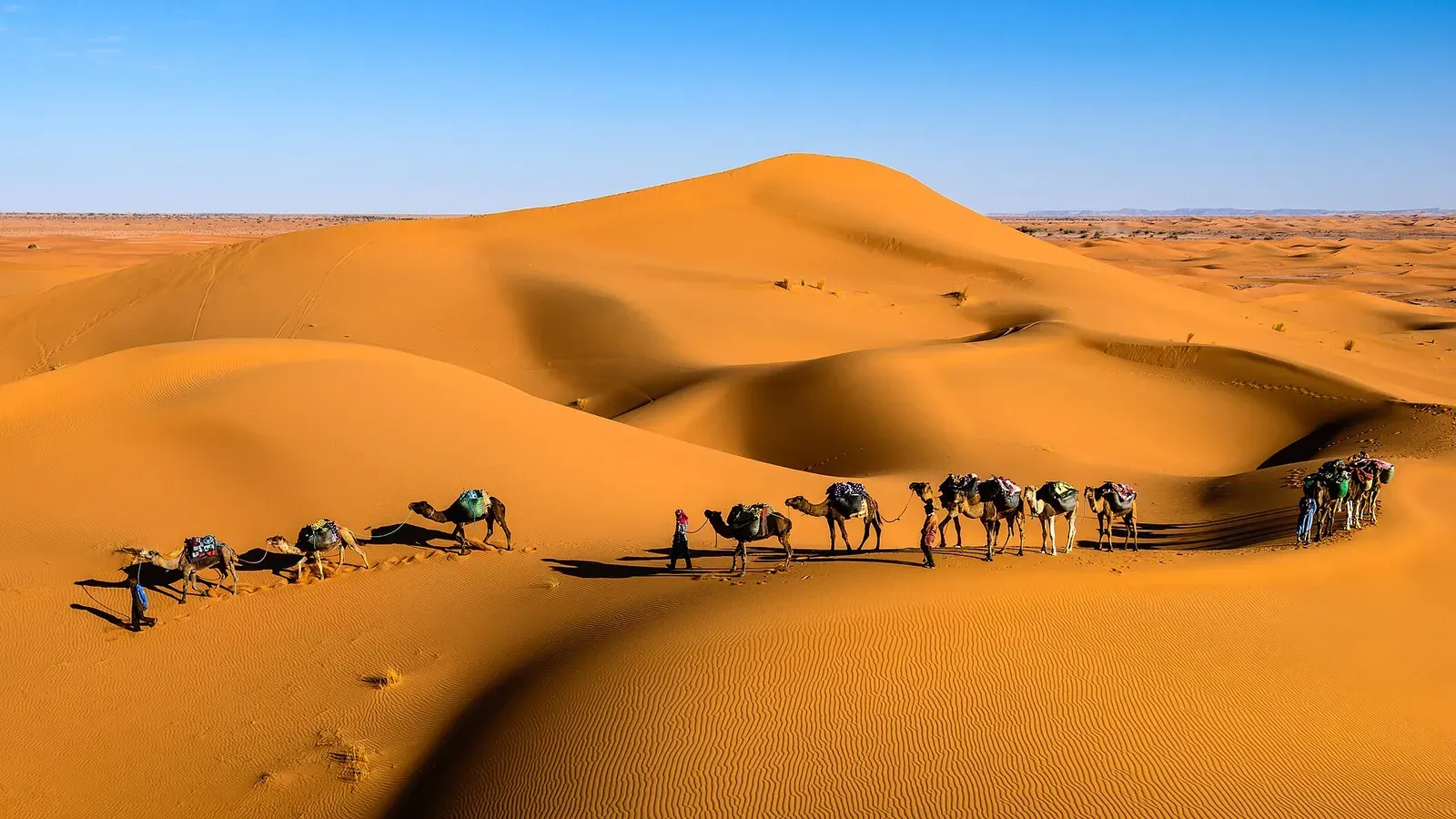 Erg ChigagaErg Chigaga guide: where it is, how high the dunes really are, the 4x4 piste from M'hamid, camp types, best months and how many days to plan.Read the guide
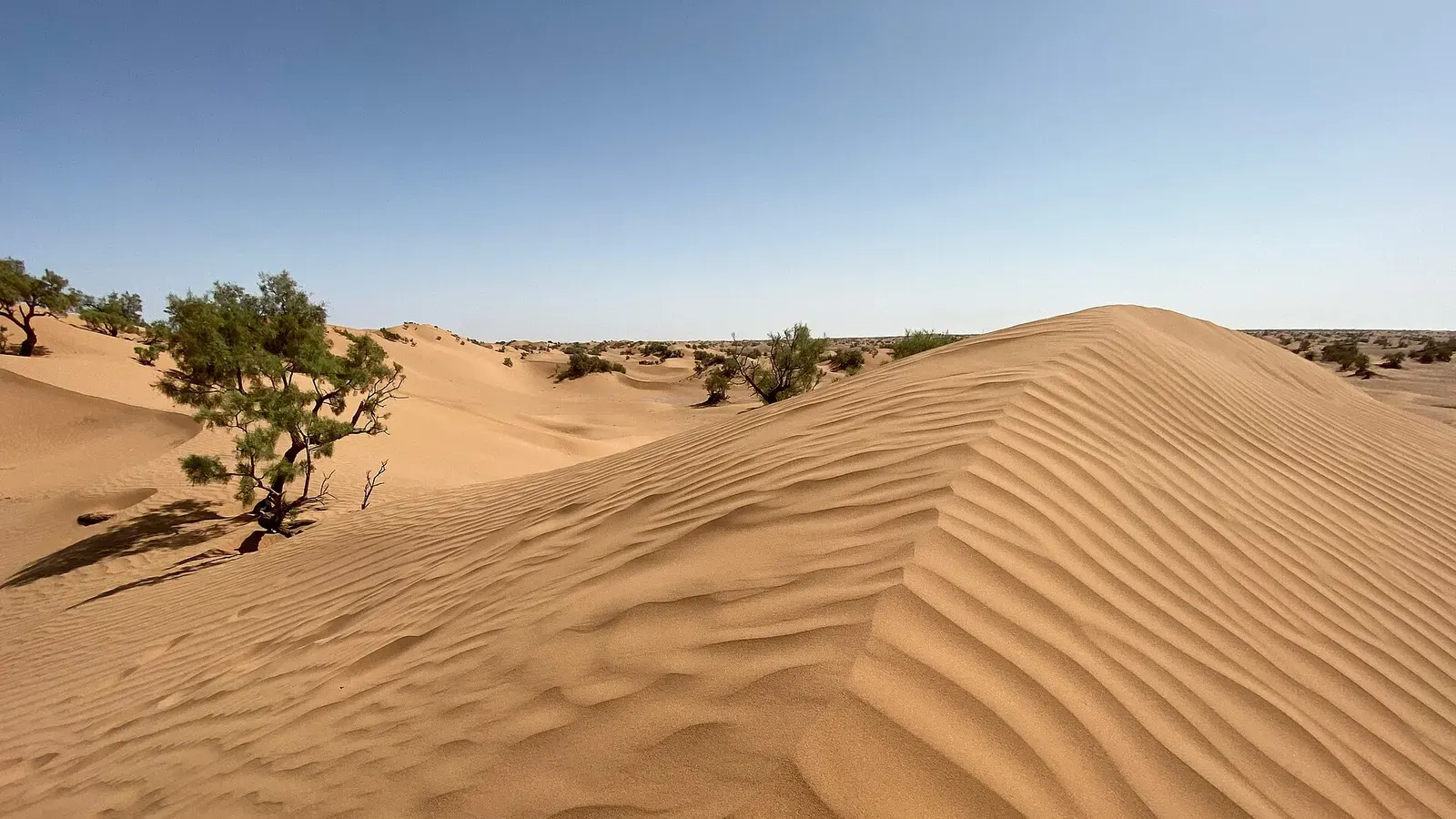 Mhamid MoroccoMhamid Morocco guide: where the N9 ends, how to get there from Zagora or Marrakech, nearby dunes, the 4x4 piste to Erg Chigaga, weather and festivals.Read the guide
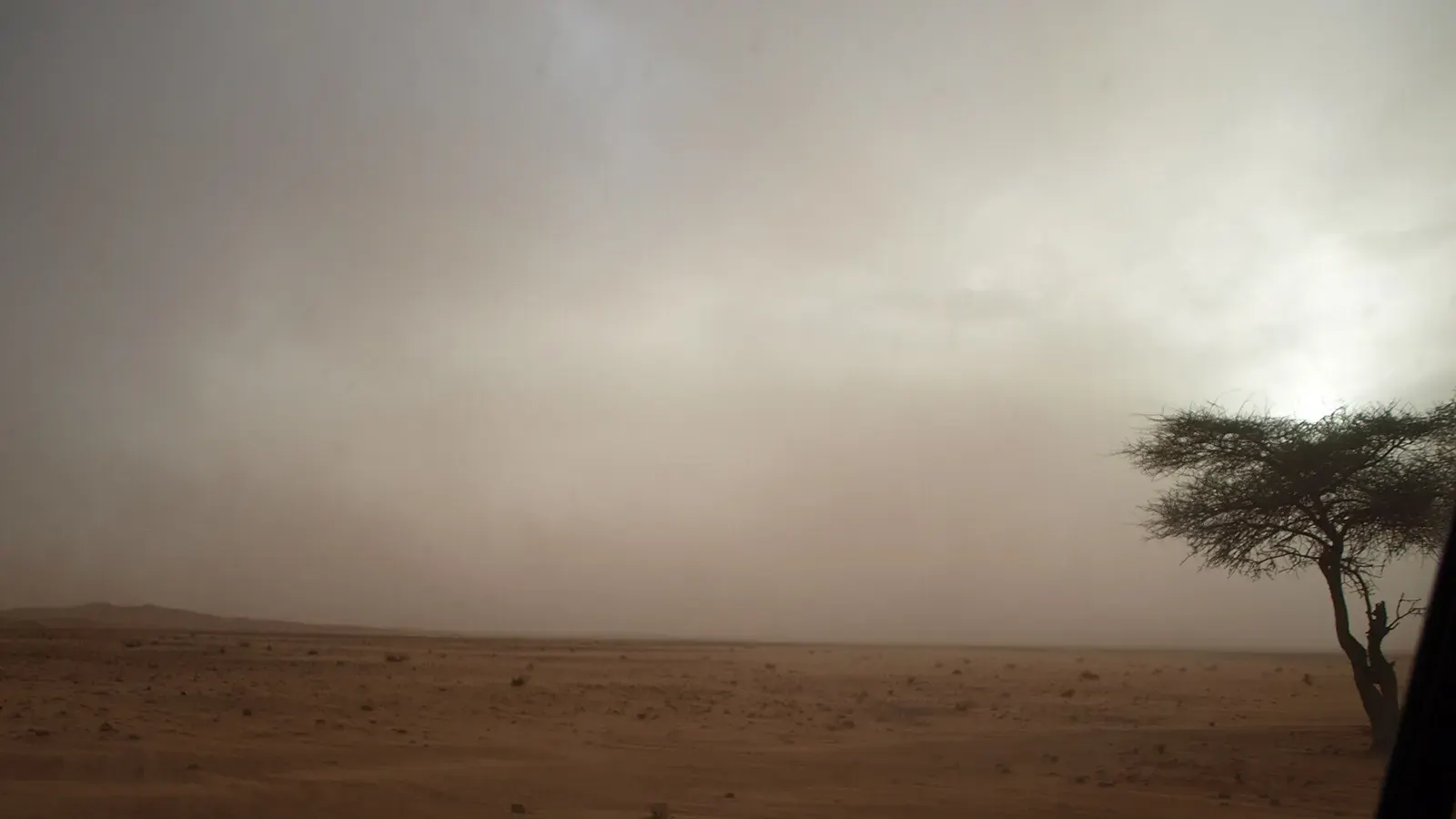 How to get to Erg ChigagaHow to get to Erg Chigaga: the M'hamid and Foum Zguid pistes, drive times from Marrakech, Ouarzazate, Zagora and Agadir, and the truth about self-driving.Read the guide
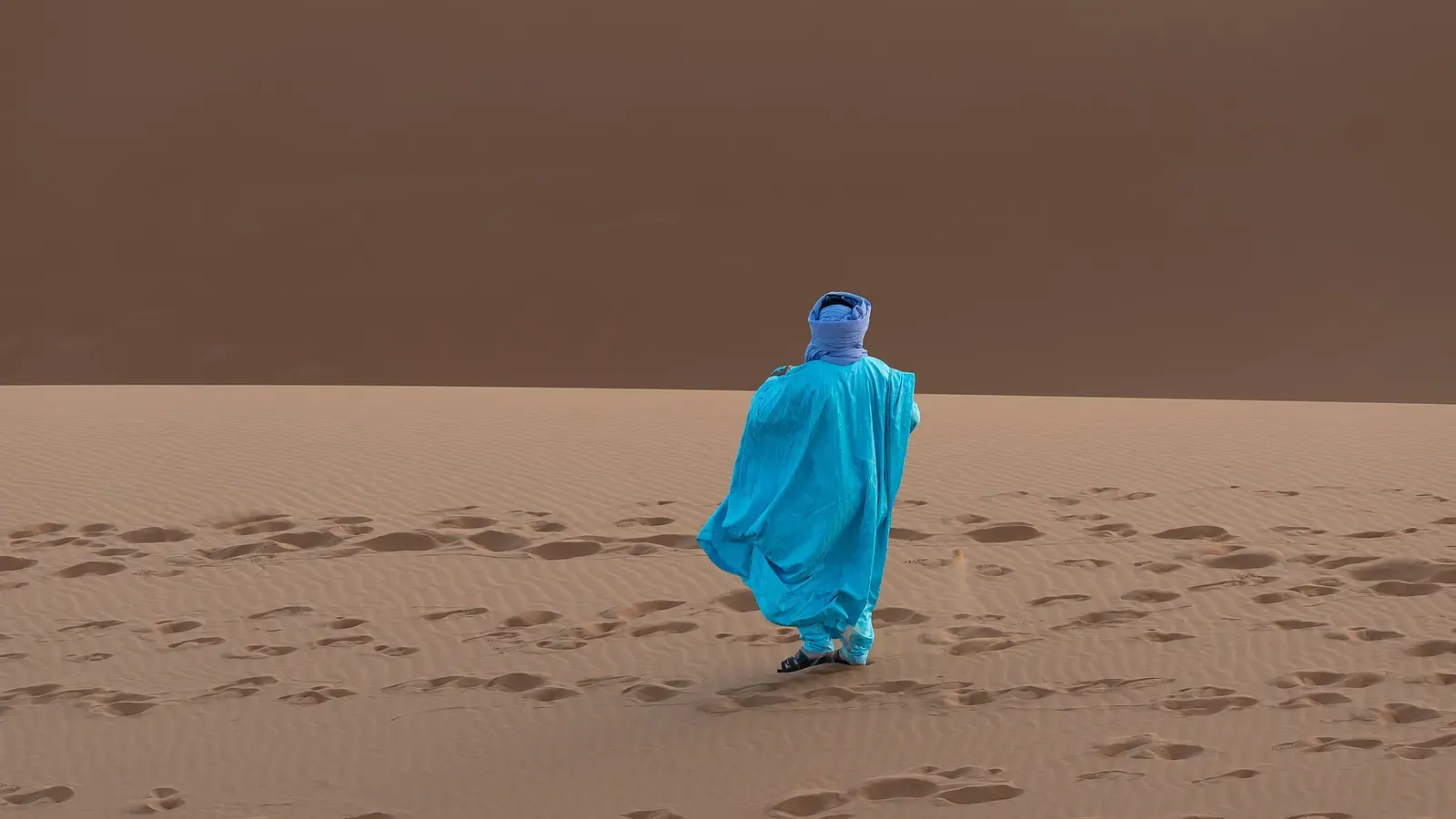 What to wear in the Sahara desert MoroccoWhat to wear in the Sahara desert Morocco: month-by-month temperatures, village dress, cheche, dune footwear, a full packing list and what to leave home.Read the guide
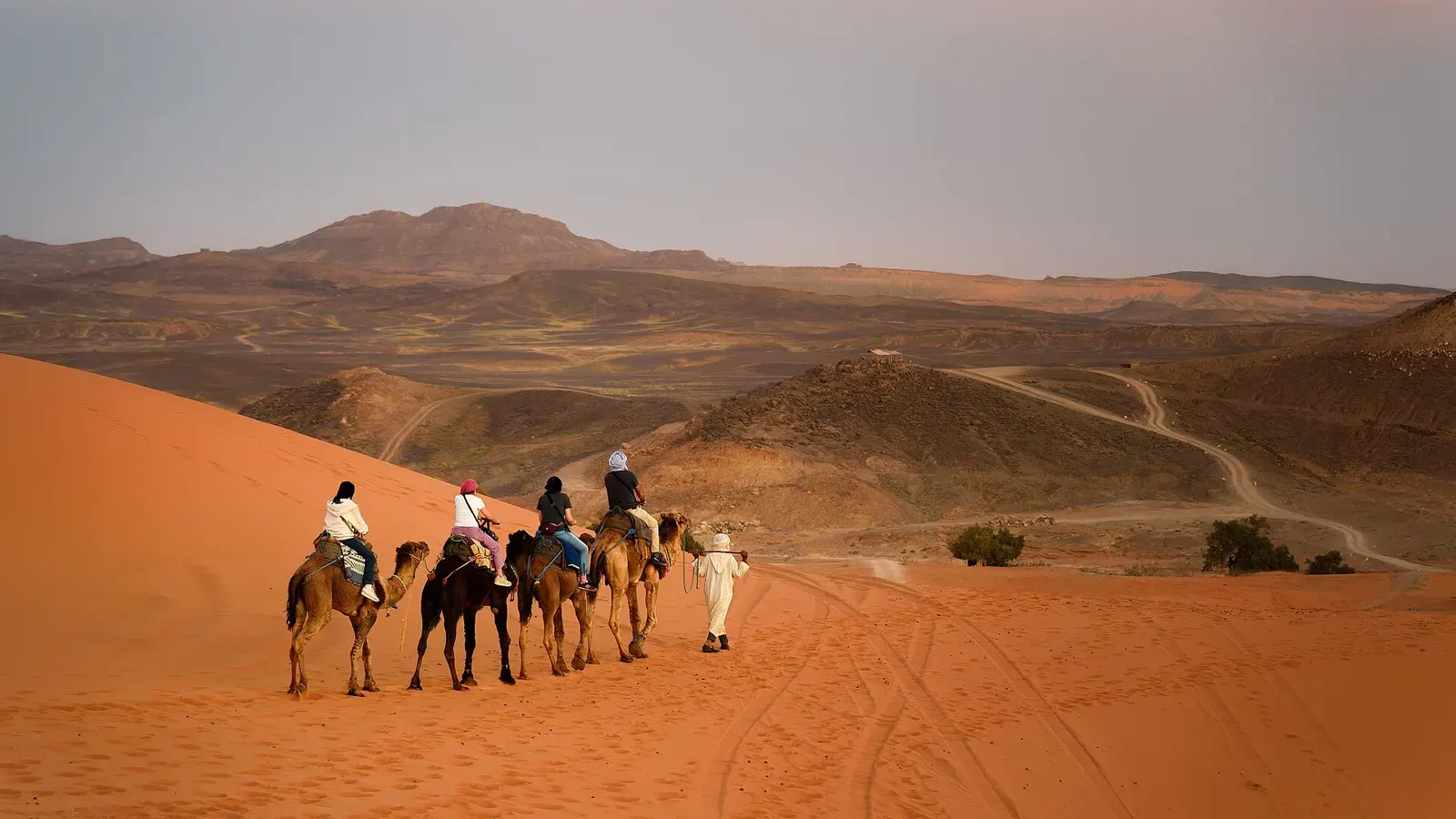 Morocco desert with kidsMorocco desert with kids: best ages and months, how to split the long drive with real distances, camel rides, camp comfort, heat and health tips.Read the guide
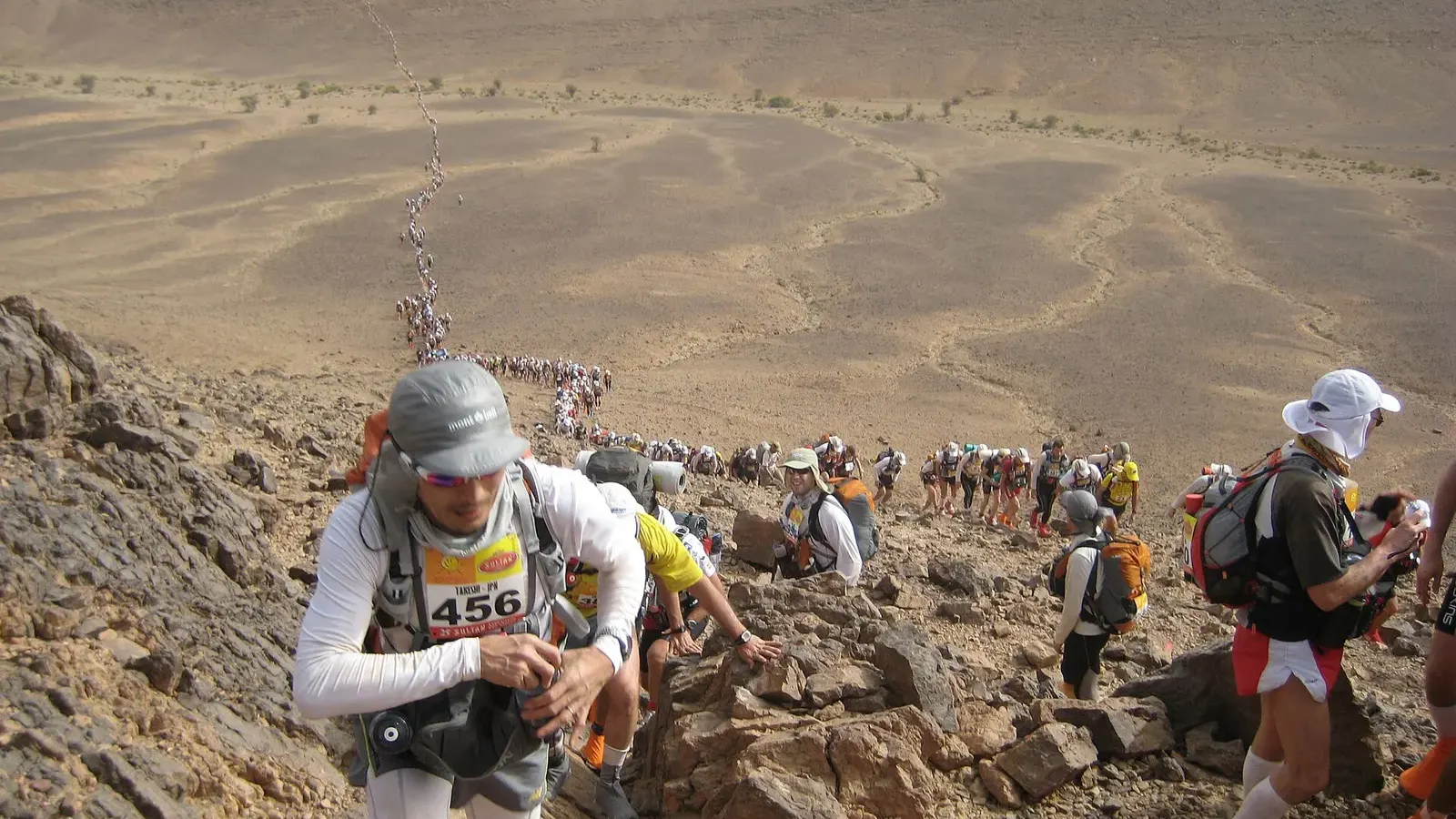 Morocco desert marathon guideMorocco desert marathon guide: MDS Legendary 2027 dates, how the 250 km stage race works, shorter Sahara races, kit rules, heat and training.Read the guide
 Morocco desert foodMorocco desert food: medfouna, sand-baked bread, tagines, couscous, Drâa and Tafilalet dates, camp meals, vegetarian tips, water hygiene, Ramadan 2027.Read the guide