Travel guide
Morocco desert food: what you will eat in the Sahara and the south
Morocco desert food is home cooking more than restaurant cooking: tagines simmered over charcoal, couscous, soup, flatbread, dates and a lot of sweet mint tea. In the south a few dishes belong to the oases themselves, such as medfouna, the stuffed “Berber pizza” of Rissani, and bread baked straight in hot sand. This guide covers what you are likely to eat in the Sahara and on the way there, what a camp dinner usually looks like, and how to handle diets, water and Ramadan.
Morocco desert food at a glance
| Dish or drink | What it is | Where you will meet it |
|---|---|---|
| Mint tea | Green tea brewed with fresh mint and sugar | Everywhere, from roadside cafés to the camp fire |
| Tagine | Stew slow-cooked under a conical clay lid | Lunch on the road, dinner at camp |
| Couscous | Steamed semolina with vegetables and meat | Friday lunch in homes; often at camps |
| Harira | Tomato, lentil and chickpea soup | Starters, and every sunset during Ramadan |
| Medfouna | Two layers of dough around a meat or spiced-fat filling | Rissani, Erfoud and Merzouga |
| Khobz mella | Flat bread baked under hot sand and embers | Demonstrations around M’hamid and the dunes |
| Dates | Mejhoul, Boufeggous and dozens more | Palm groves and markets of the Drâa and the Tafilalet |
Mint tea comes first
Wherever you stop, someone will make tea. Moroccan mint tea is gunpowder green tea brewed with spearmint and a generous amount of sugar, then poured from a height into small glasses, which mixes and aerates it. Hospitality usually means at least three glasses. In a camp it is the welcome drink on arrival, and it comes back after dinner.
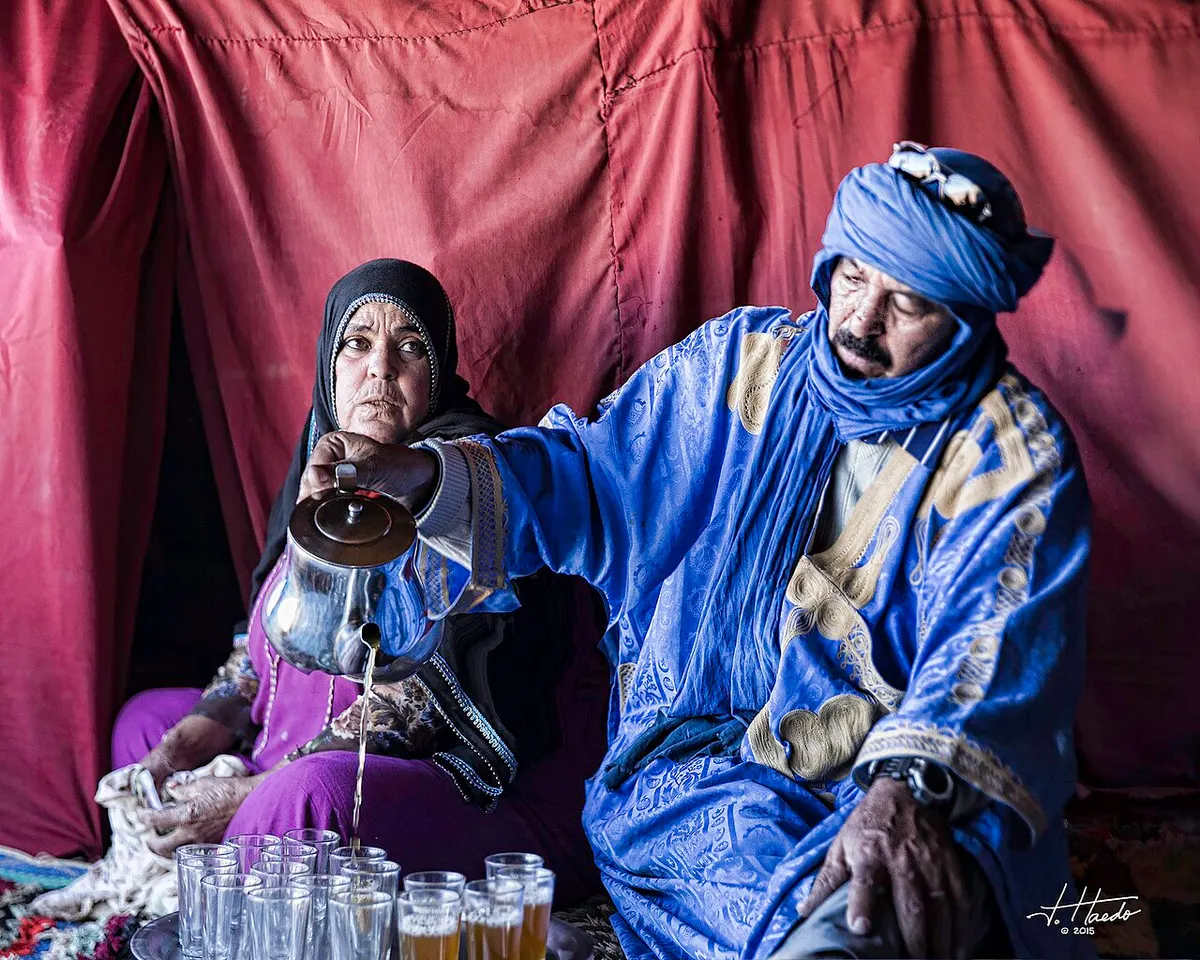
If you take your tea without sugar, say so before it is brewed, because the sugar goes into the pot, not the glass.
Tagines: kefta, chicken with preserved lemon and vegetables
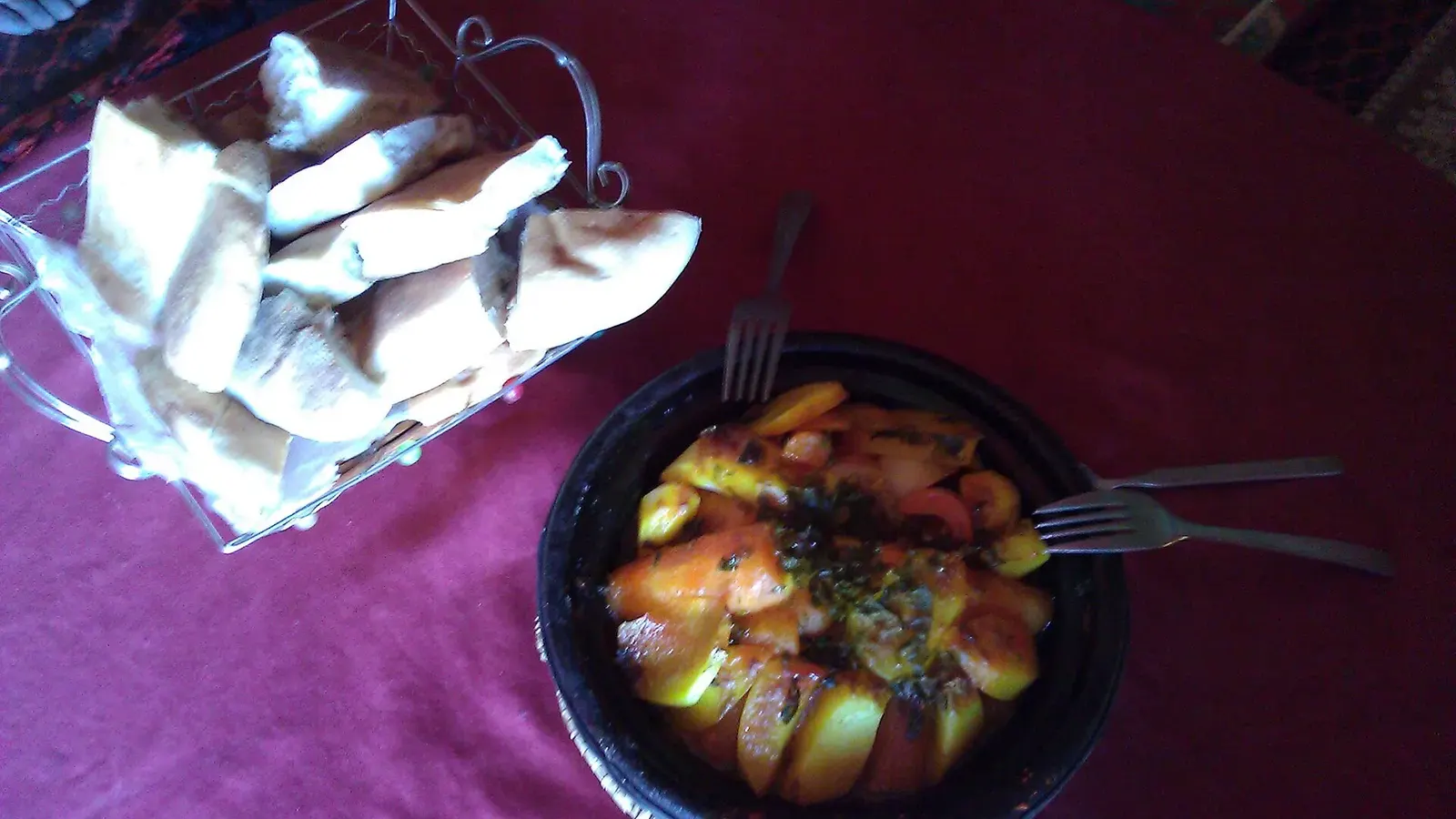
A tagine is both the pot and the dish. The shallow clay base sits on charcoal, and the tall cone-shaped lid sends the steam back down, so meat and vegetables cook slowly in very little water. Three versions turn up again and again on the road south:
- kefta: spiced meatballs in a tomato and onion sauce, with eggs cracked on top at the end,
- chicken with preserved lemon and olives,
- vegetables, made with whatever is in season, often potatoes, carrots and courgettes.
Lamb or beef with prunes and almonds appears too. In the dunes, tagine is the usual main course: it needs one pot and a few coals, and the lid keeps it hot until it reaches the table.
Couscous and the Friday tradition
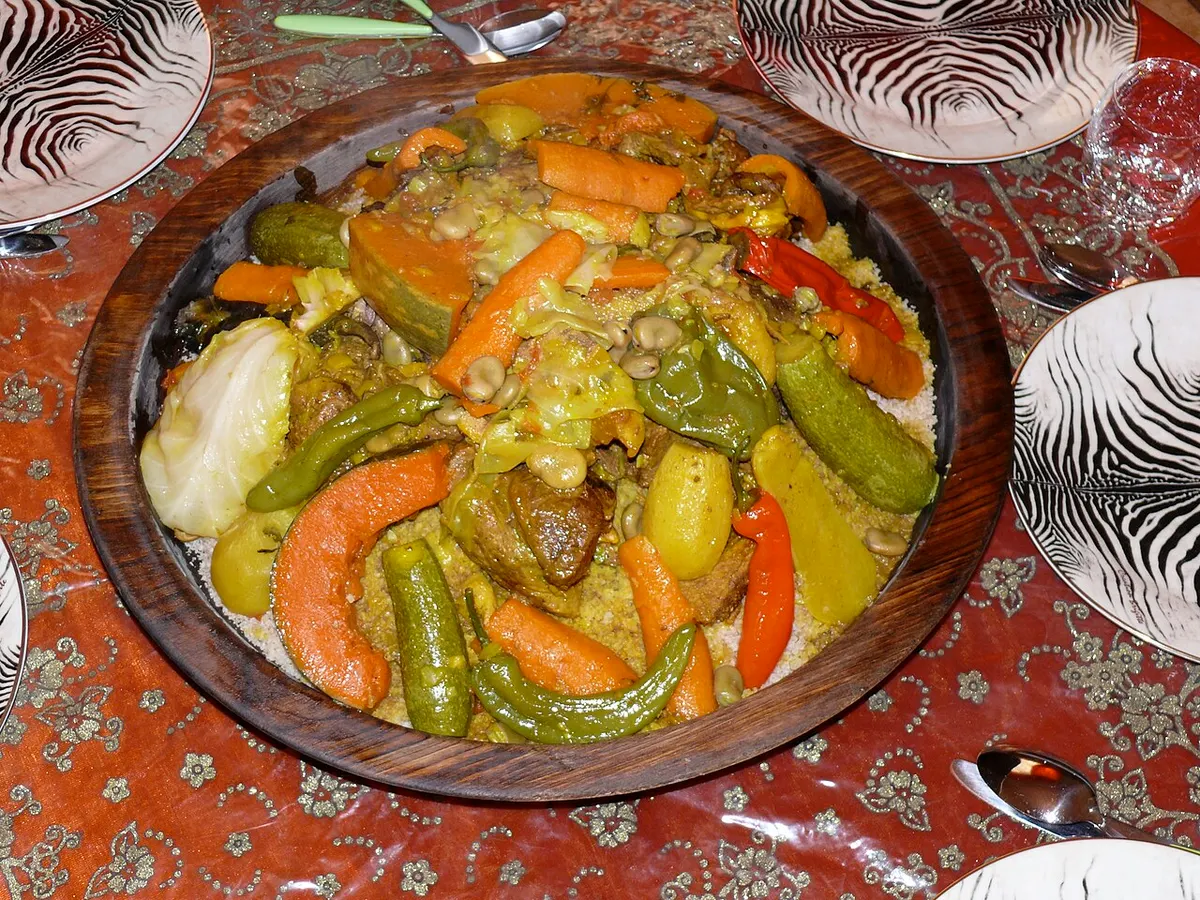
Couscous is steamed semolina rolled by hand, served heaped on a large platter under vegetables and meat or chicken. In 2020, UNESCO added the know-how behind it to its intangible heritage list, in a joint file from Algeria, Mauritania, Morocco and Tunisia.
In Moroccan homes, couscous is the Friday lunch, eaten with the family after the midday prayer. Camps do not follow that rule and may serve it any night. In the south you sometimes find it with camel meat.
Harira, the soup before dinner
Harira is a thick soup of tomatoes, lentils and chickpeas, flavoured with herbs and spices and thickened with a little flour. Most versions include a small amount of meat or are made on a meat stock, so vegetarians should ask. Throughout the year it is a common starter. During Ramadan it is the dish that breaks the fast at sunset, with dates and honey pastries.
Medfouna, the “Berber pizza” of Rissani
Medfouna is the dish most travellers link with the Tafilalet. It is a large disc of bread with two layers of dough and a filling sealed in between: minced meat or spiced fat, onions, herbs and spices, sometimes eggs or almonds. Cut into wedges, it is eaten with tea.
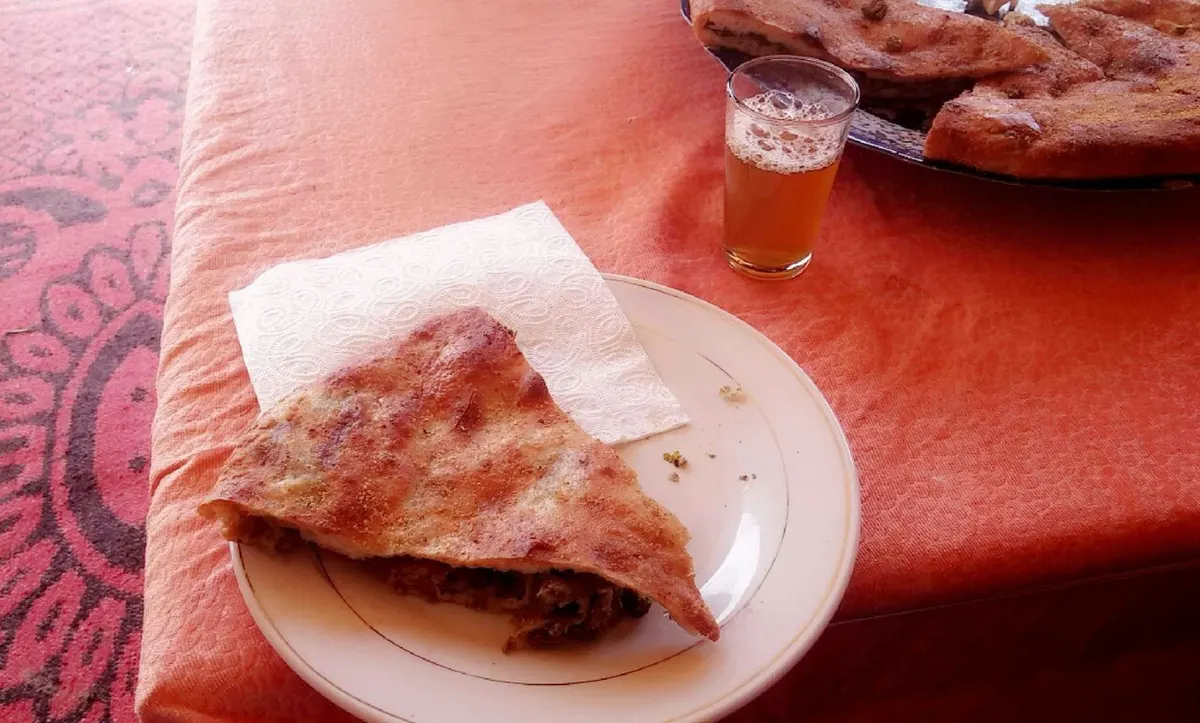
The name comes from the Arabic for “buried”, after the old way of baking it under hot sand and embers. Today most medfouna in Rissani comes out of a wood-fired or clay oven. The dish is so closely tied to the town that it is often simply called “a Rissani” in the region. Where it was first made is less clear. Most sources place it among the Amazigh oasis communities of the south-east, and Wikipedia also describes a Middle Atlas version cooked over a wood fire. We found no documented history that pins down a birthplace or a date, so read confident origin stories with some caution. If you are heading to Erg Chebbi, the cafés of Rissani, Erfoud and Merzouga are where to try it; see how that desert compares in our Erg Chebbi vs Erg Chigaga guide.
Bread baked in the sand: khobz mella
Around M’hamid El Ghizlane, at the end of the Drâa road, bread baked in the sand is called khobz mella (خبز الملة), and abadir in Amazigh. A fire is lit on the sand and pushed aside once the sand below is hot. A flat round of dough, usually just flour, water and salt, goes into the hollow, is covered with hot sand and embers, and is dug out when done. The crust is tapped and brushed clean, then the bread is broken by hand and eaten with stew or simply with tea.
You may also read the name taguella. That is the Tuareg name for the same kind of bread, used in southern Algeria and elsewhere in the central Sahara, and it is not the usual word in Morocco.
A 2021 report from M’hamid in the Moroccan outlet Al3omk says that men now bake it mostly for visitors on desert outings, while women make it at home and for weddings and family celebrations. Sand-bread baking has also featured among the main activities of the International Nomads Festival in M’hamid. On a trip to M’hamid or Erg Chigaga, ask your guide whether a sand-bread session is possible; it is not something every camp does.
Dates of the Drâa and the Tafilalet
The palm groves you drive through south of Ouarzazate are date orchards. The Drâa-Tafilalet region grows about 83% of Morocco’s dates, and the agriculture ministry forecast the 2026-2027 national crop at about 177,000 tonnes. The harvest runs through the autumn, roughly September to November, and the International Date Fair (SIDATTES) in Erfoud ran from 28 October to 1 November in 2026.
Names worth knowing at the market:
| Variety | What to expect |
|---|---|
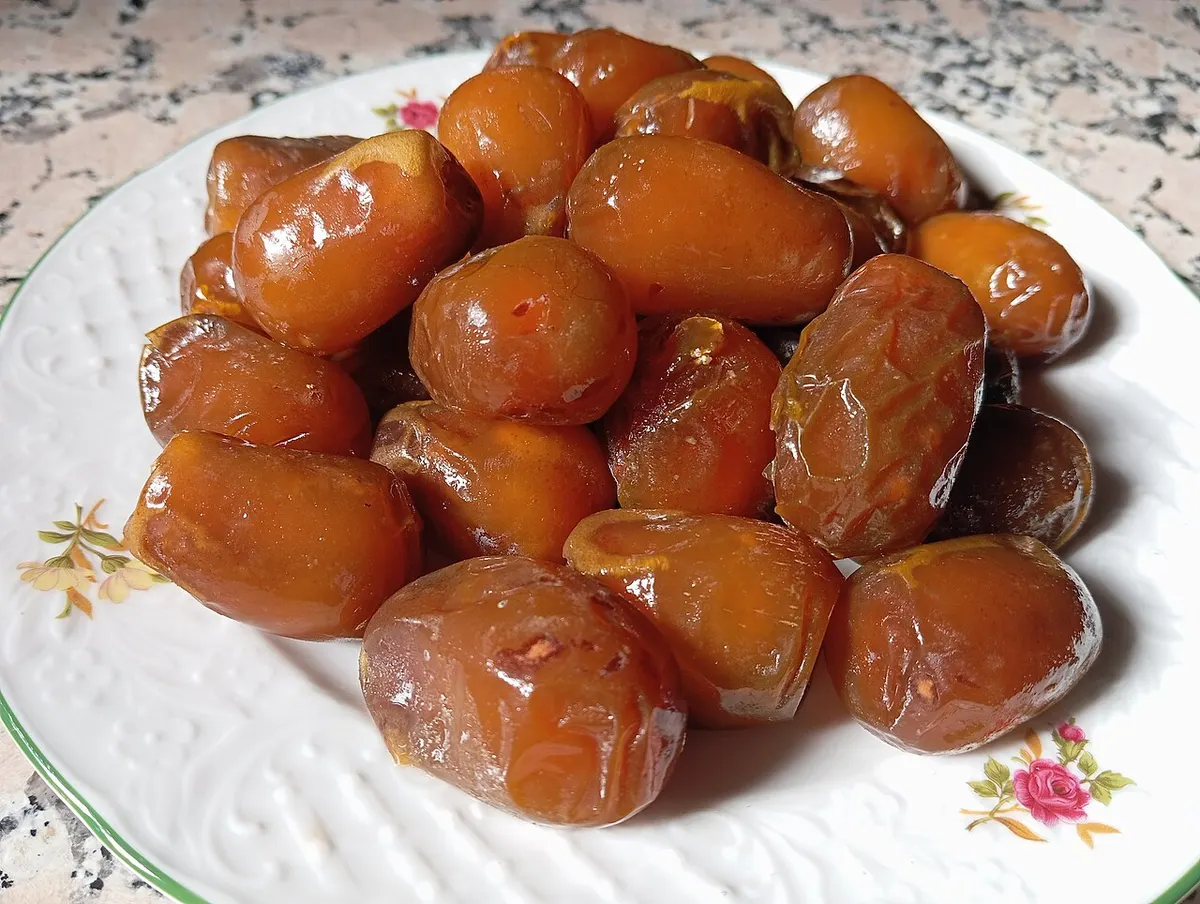
| Mejhoul (Medjool) | Large, soft and very sweet; considered Morocco’s finest date and traced to the Tafilalet |
| Boufeggous | With Mejhoul, the dominant variety in traditional palm groves, according to a 2025 survey |
| Jihel | Common market date, rated by researchers as having good commercial value |
| Bousthammi (black) | Dark date grown in the Drâa and the Tafilalet |
Mejhoul also made it abroad. After the bayoud fungus devastated Tafilalet palm groves in the early 20th century, offshoots were taken to the United States in 1927, and much of the Medjool grown in California and Arizona traces back to them. The best place to try local dates in season is a market in Rissani, Erfoud or Zagora, where the souk runs on Wednesdays and Sundays; our Zagora Morocco guide describes the town and its palm grove.
Camel meat
Camel meat is eaten in the south, but it is not an everyday dish and you will not find it on most menus. Markets sell it, and it is usually minced for kefta or slow-cooked, because the meat is lean and tough. If you want to try it, ask your guide or driver to find a place on the way, or look for camel couscous in the south.
A typical desert camp dinner and breakfast
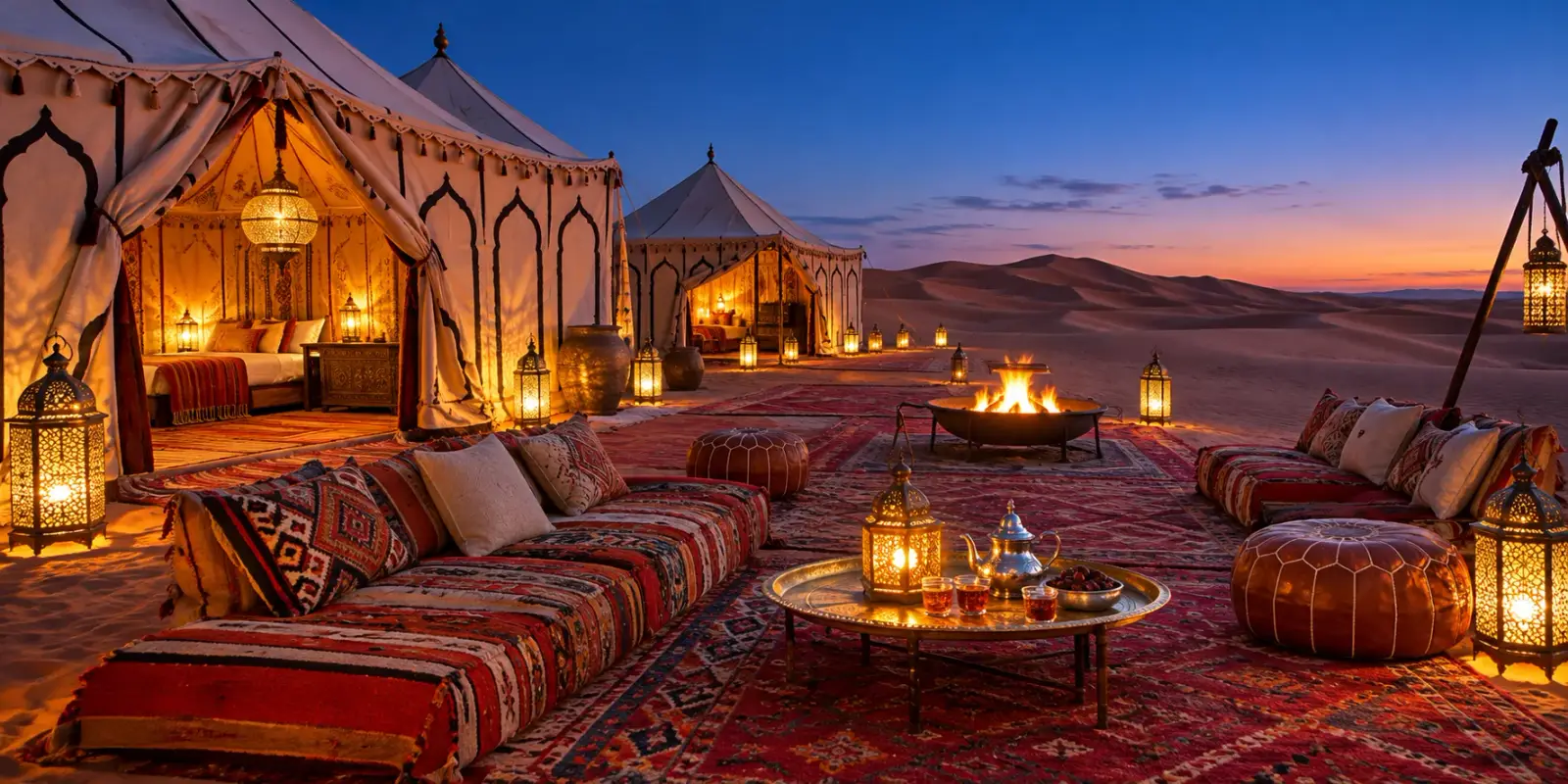
There are no restaurants in the dunes, so the Morocco desert food most visitors actually eat is whatever the camp cooks. The pattern is much the same from Merzouga to Erg Chigaga:
- on arrival, mint tea with nuts, biscuits or dates,
- for dinner, soup or a few Moroccan salads, then a tagine or couscous, then fresh fruit,
- after dinner, more tea by the fire,
- for breakfast, bread or msemen (a square, flaky flatbread), sometimes baghrir pancakes, with honey, jam, butter, olive oil or amlou, often eggs, and tea or coffee.
Amlou is a spread of crushed almonds, argan oil and honey, worth knowing about if you have a nut allergy. Our guide to camping in Morocco desert explains what else to check before you book, including whether dinner is included.
Vegetarian, vegan and allergies
Vegetarians usually manage well with Morocco desert food. Vegetable tagine, vegetable couscous, salads, eggs and bread are standard fare. The risk is meat you cannot see: vegetable dishes may be cooked in meat stock, and harira often contains a little meat. Vegans should also ask about butter and smen, the preserved butter used in some dishes, and honey on the breakfast table.
For allergies, plan ahead. Couscous, bread and msemen are all wheat, which makes a gluten-free stay hard work. Almonds turn up in tagines, pastries and amlou. A camp in the dunes is hours from a pharmacy or hospital, so tell the camp about any diet or allergy when you book, carry a note in French and Arabic, and bring your own medication.
Water and food hygiene
Drink bottled, boiled or filtered water, which is what UK travel health experts advise for Morocco, and use it for brushing your teeth. Camps usually supply bottled water. The CDC’s travel advice is to eat food that is fully cooked and served hot, peel fruit yourself, skip ice and choose sealed drinks. Freshly made mint tea, served steaming hot, passes that test. The CDC also recommends hepatitis A and typhoid vaccines for most travellers to Morocco. Our guide on whether the Sahara desert in Morocco is safe covers health in more detail.
Ramadan 2027 in the desert
Ramadan follows the lunar calendar. As of November 2026, timeanddate gives a tentative start for Morocco on Monday 8 February 2027, and the UAE’s astronomy centre projects Eid al-Fitr for 9 or 10 March. Morocco sets the exact dates by its own moon sighting.
Visitors are not expected to fast, and camps and hotels feed their guests as usual. In towns, some cafés close during the day, and you should not eat, drink or smoke in the street in daylight. At sunset the fast is broken with harira, dates, hard-boiled eggs and sweets. If you are invited to share it, accept. Our page on the best time to visit Sahara desert Morocco explains how Ramadan and the Eid holidays affect transport.
Table manners: right hand and bread as your spoon
When a tagine or a platter of couscous is shared, everyone eats from the same dish. Eat with your right hand only, since the left is considered unclean. Tear off a piece of bread, pinch it between your thumb and first two fingers and use it to scoop. Take food from the part of the dish in front of you, and leave the meat alone until your host offers you a piece. Bread is handed out by the host, so wait to be given some.
Nobody expects visitors to get all of this right, and if you would rather use a spoon, just ask. Alcohol is sold only in licensed places in Morocco, so do not assume a camp serves it, and ask before you bring your own.
Plan your trip
Morocco desert food is a good reason to slow the route down, with a medfouna stop in Rissani or an autumn morning at the date market in Zagora. For the rest of the trip, see our guide to Morocco desert activities, read about the Morocco desert with kids if you travel with children, and compare our Erg Chigaga tours, asking each operator what is served at camp and how they handle special diets.
Frequently asked questions
What do you eat in a Moroccan desert camp?
Dinner usually follows the same pattern: mint tea and a snack when you arrive, then soup or Moroccan salads, a tagine or couscous as the main dish, and fresh fruit to finish. Breakfast is bread or msemen flatbread with honey, jam, butter or olive oil, sometimes eggs, plus tea and coffee. Menus vary from camp to camp, so ask what is included and mention any diet when you book.
What is medfouna?
Medfouna is a large round bread made of two layers of dough with a filling of minced meat or spiced fat, onions, herbs and spices. It is often called Berber pizza and is most associated with Rissani, near Merzouga. The name means buried in Arabic, from the old way of baking it under hot sand and embers. Today most medfouna in Rissani comes out of a wood or clay oven.
Is the bread really baked in the sand?
Yes, in some places. Around M'hamid the method is called khobz mella: a flat round of flour, water and salt is laid on sand heated by a fire, covered with hot sand and embers, then dug out and brushed clean. Guides sometimes bake it for visitors, and it has featured among the main activities of the nomad festival in M'hamid. Most bread you eat at camp, though, comes from a village oven.
Is Morocco desert food OK for vegetarians and vegans?
Vegetarians usually manage well, since vegetable tagines, couscous with vegetables, salads, bread and eggs are easy for any kitchen. The catch is hidden meat: vegetable dishes can be cooked in meat stock, and harira often contains a little meat. Vegans should also ask about butter and smen, the preserved butter used in some dishes. Tell the camp when you book, because it has to bring every ingredient in.
Can you drink the water in a Moroccan desert camp?
Drink bottled, boiled or filtered water, which is what UK travel health experts advise for Morocco, and camps usually supply bottled water. Use it for brushing your teeth too. The CDC advises avoiding ice and fruit you have not peeled yourself, and says hot drinks are fine when they are served steaming hot, which covers the mint tea you will be offered all day.
Can you eat during Ramadan in the Moroccan desert?
Yes. Visitors are not expected to fast, and camps and hotels keep serving meals to guests. In towns, some cafés close during the day, and it is polite not to eat, drink or smoke in the street in daylight. Ramadan 2027 is expected from about 8 February to 9 or 10 March. At sunset, the fast is broken with harira soup, dates and sweets, and you may be invited to share it.
Which Moroccan dates should I try?
Mejhoul (sold abroad as Medjool) is the most prized: large, soft and sweet, and traced to the Tafilalet oases. Boufeggous is the other big name and, with Mejhoul, the most common date in the traditional palm groves. Jihel and black Bousthammi are other varieties you will see in markets. The new harvest reaches markets in autumn, roughly September to November.
Sources we checked
- Medfouna (Wikipedia)
- Mad for madfouna, a Moroccan specialty (Collette)
- Drâa heritage: mella bread of M'hamid El Ghizlane (Al3omk, in Arabic)
- Desert nomads festival in M'hamid El Ghizlane (Akhbarona, in Arabic)
- Khobz al-mella, the Saharan sand bread (Arabic Post, in Arabic)
- Taguella (Wikipedia)
- Couscous: knowledge, know-how and practices (UNESCO)
- Moroccan cuisine (Wikipedia)
- Tajine (Wikipedia)
- Harira (Wikipedia)
- Maghrebi mint tea (Wikipedia)
- Morocco food and drink (World Travel Guide)
- The national dish of Morocco (G Adventures)
- Why do Moroccans eat couscous on Fridays? (Culture Trip)
- Identification of volatile compounds of eight Moroccan date varieties (Harrak et al., Fruits, 2005)
- Date palm varieties in traditional palm groves (El Bakouri et al., Cahiers Agricultures, 2025)
- Medjool (Wikipedia)
- Topics in Subtropics: Medjool origins (UC Agriculture and Natural Resources)
- Erfoud hosts the 15th SIDATTES amid a record harvest (Hespress FR)
- Morocco's date harvest forecast to rise 11% to 177,000 tons (FreshPlaza)
- Erfoud hosts the 15th SIDATTES, 28 October to 1 November (Le Matin)
- This Moroccan restaurant's camel burger (Tasting Table)
- Food and drink considerations when traveling (CDC)
- Morocco (TravelHealthPro)
- Ramadan begins in Morocco (timeanddate.com)
- Ramadan, Eid Al Fitr, Eid Al Adha 2027 likely dates (Khaleej Times)
- Customs and etiquette in Morocco (Rough Guides)
- Responsible tourism in Morocco (Responsible Travel)
Keep exploring
Related pages
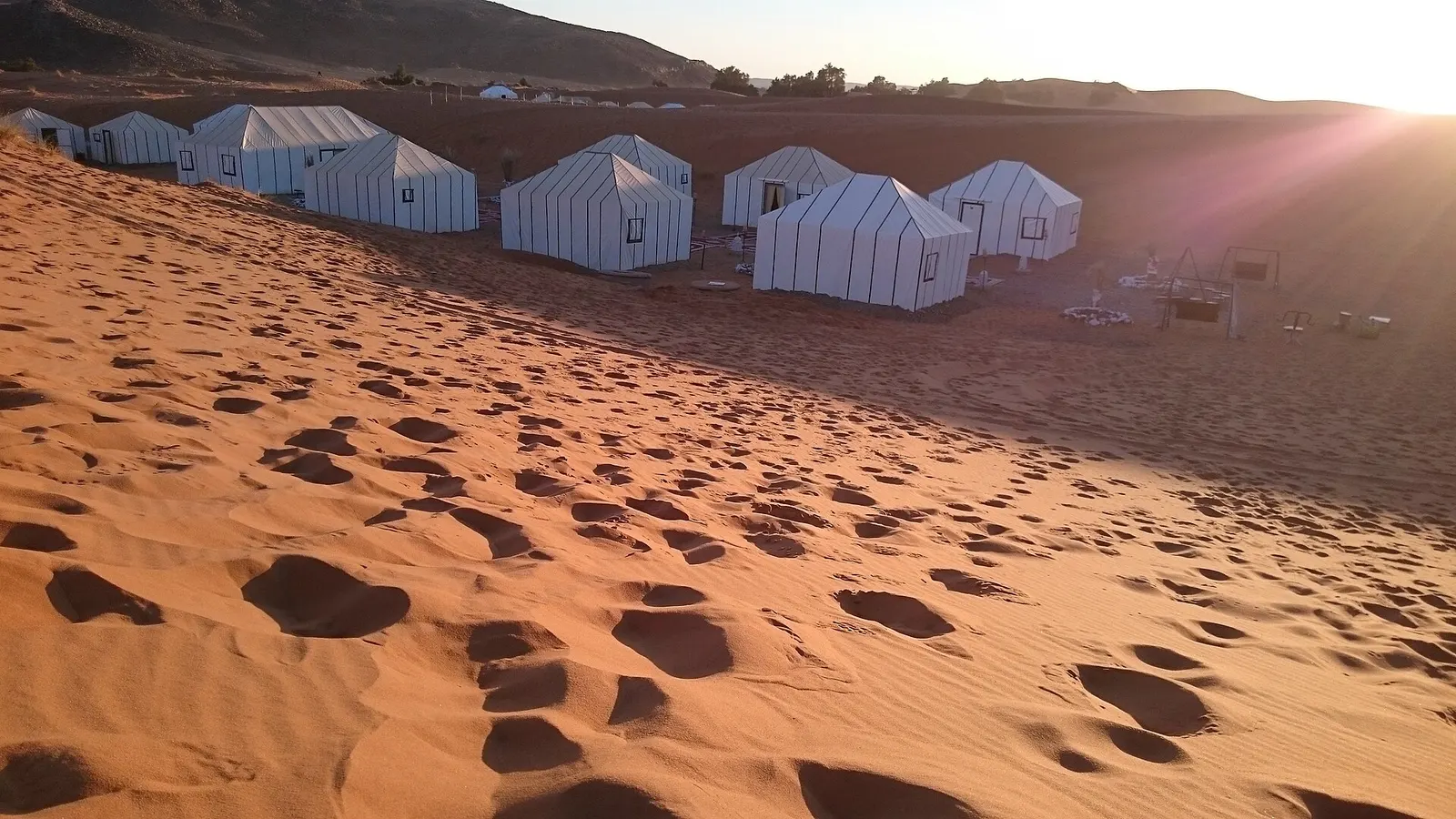 Camping in Morocco desertCamping in Morocco desert: nomad, standard and luxury camps, what a night is really like, night temperatures, wild camping rules and how to vet a listing.Read the guide
 Morocco desert activitiesMorocco desert activities by place and season: camel rides and treks, 4x4, quads, sandboarding, dune walks, Gnawa music, fossils, festivals and balloons.Read the guide
 Is the Sahara desert in Morocco safe? Advisories, real risks and how to manage themIs the Sahara desert in Morocco safe? US, UK, French and Canadian advice as of November 2026, plus the Algerian border, heat, scorpions and snakes.Read the guide
 Morocco desert with kidsMorocco desert with kids: best ages and months, how to split the long drive with real distances, camel rides, camp comfort, heat and health tips.Read the guide
 Best time to visit Sahara desert MoroccoThe best time to visit Sahara desert Morocco is October to November and February to April. Month-by-month temperatures, wind, Ramadan 2027, festivals.Read the guide
 Erg ChigagaErg Chigaga guide: where it is, how high the dunes really are, the 4x4 piste from M'hamid, camp types, best months and how many days to plan.Read the guide